“Keep away from those who try to belittle your ambitions. Small people always do that, but the really great make you believe that you too can become great.”
Mark Twain to Gay Zenola MacLaren
I was originally going to
title this piece My Relationship With Sara Niemietz, but the word
relationship is too often misunderstood to imply a more intimate
connection, and I didn’t wish to mislead anyone. I have no such
relationship with her. I thought of changing With to To, but that
sounds like the relationship I have To the keyboard on which I’m
writing or To the chair on which I’m sitting, and that seems rather
cold. I don’t wish to sound that way either.
I thought a bit about how I
know her, and I find that instructive to me, and I suspect it might
be interesting to you if you like Music, or poker, or stories of
wildly unlikely circumstances that change one’s life. Those things I
can deliver for you.
Who
is Sara Niemietz?
She’s
the most popular singer of whom you’ve never heard. She’s utterly
independent, and her music is unique. It can be called many things.
There are elements of jazz, pop, blues, and even a bit of dance to be
heard in it. She’s the most well known artist in the group
Postmodern Jukebox. Her videos have millions of views. She’s just a
very quiet, unassuming genius.
Well,
how DO you know Sara Niemietz?
To
answer that, you have to go back to 1988, before she was even born.
That was when I first saw The Wonder Years.
If you’ve never seen it, the show is about a young boy growing up in
the 1960s, and it is told in first person from the point of view of
the protagonist, 25 or so years later. The Narrator is the Adult
Kevin Arnold telling us about his childhood. Particularly in its
first few seasons, it was a brilliant show. I watched it
religiously. And it changed not just my writing style, but it moved
me toward writing about my own childhood from the same era.
One of
the most powerful aspects of the show was its music. The theme, by
Joe Cocker, “A Little Help From My Friends,” was fine, and
popular. Everyone loved it. And I didn’t care nearly as much about
that as I did the way the music felt behind the dialogue. The music
helped me to feel the words. It snuck inside of me, and it guided my
heart in the direction the writers intended it to go.
A few
years later, I’ll Fly Away, arguably the greatest series ever
on network television, arrived. The music in that show was also
properly applied. There are scenes I have never seen with clear eyes.
The music sees to that.
And then
in 1999, we had The West Wing. The show was incredibly
popular, and the writing is beyond compare.
What
does all this have to do with Sara Niemietz?
Snuffy
Walden.
He was
the genius behind the music that had moved me so deeply. His work
was hard to find. He appeared now and then on a Christmas CD for
Windham Hill or something, and he did finally release a CD of his own
called Music By… but that was about it.
Snuffy
Walden was my musical hero. He has been for over 3 decades.
Fast
forward to 2015.
I begin
playing Facebook Poker. I get to be good at it.
And one
night I play a particularly rare and interesting hand. I’m told that
technology exists that would have allowed me to record the hand, but
if it did, I didn’t have it, and if I would have had it, I wouldn’t
have known I was about to experience a life changing moment that I
would love to have recorded.
I played
against an opponent whose icon was an older man playing a guitar. He
was an amazing player. He was, in fact, the first player I had seen
in a long time who was better than I was, so I began to pay
attention.
We
started talking in the little Poker Chat. I told him how impressed I
was with his performance, and he was equally impressed with my play.
After a
few minutes I mentioned he shared a name (Snuffy) with one of my
favorite composers, a guy named W.G. Snuffy Walden. And he told me
that was him.
Wait….
what??
I had
just met someone who had been my hero for nearly 30 years. It was
unbelievable.
And we
talked and played, and played and talked. And soon enough, we became
friends on Facebook.
A few
months into it, he mentioned he had a band called Babylon Social Club
that would be playing in California over Thanksgiving. He suggested
I come out from Arizona to see them. I not only got to know my hero
over messages on Facebook; I was going to get to meet him. This was
unbelievable.
I borrowed $500 from one of those neon sign loan places, at about 239% interest, which was a financially stupid thing to do, but I couldn’t possibly have cared less. I was going to California to meet my hero. And I did.
I got a
room at the hotel at which they were playing, Westlake Village Inn.
I got there the night before they were going to play because I wanted
to be well rested so I could enjoy the moment as much as humanly
possible. And I got to the venue, a place called Bogie’s, a good
hour before the band was scheduled to start. I wanted to make sure I
got the best seat in the house.
And in a
little while, in walked a man whose music had brought me to tears and
sent me into pure Joy more times than I could count. He recognized
me from my Facebook pictures. And he came and gave me a hug. He
bought me a beer. We talked a few minutes, and he had to go set up.
I was floating in the air.
In our
conversations on Facebook, he had mentioned that he had been
mentoring a young singer. He had even sent me one of her videos. I
looked at it, but I didn’t pay much attention. I was distracted by
life. It was just a video.
And then, she took the stage. And when she sang, I was completely overwhelmed. Her voice owned the room. The venue was packed to the gills, but it was utterly silent when this band played, and when they finished, the bar erupted with deafening applause. Who the hell was this girl?? I had never heard anything like her.
Everyone
in the band was a significant musician, recorded on albums with
artists like Kenny Loggins, Tower of Power, and Bonnie Raitt. This
wasn’t some cover band from Phoenix. This was a group of
professional musicians playing at their prime in a small intimate
venue, and I was right up front to hear and experience every blissful
note. I felt like my father, listening to Miles Davis in a smoke
filled bar before I was even a twinkle in Dad’s eye.
By the
end of the evening, I was emotionally exhausted, and I was floating
in catharsis. Snuffy introduced me to everyone in the band,
including Sara Niemietz, and her mother, Cheryl. I wanted Sara’s
CDs. She had two out, by then, and Cheryl had them both for sale.
Fountain and Vine was the latest. Push Play had been
released earlier. I bought them both, and Sara and Snuffy
autographed them for me. I took pictures with them. And I was the
luckiest man on the planet.
Greatness
Because
one believes in oneself, one doesn’t try to convince others. Because
one is content with oneself, one doesn’t need others’ approval.
Because one accepts oneself, the whole world accepts him or her. –
Lao Tzu
When I met Sara Niemietz, she behaved precisely as though she were an
ordinary person. There was no barrier of Greatness, as one might
expect. I was talking to someone infinitely more talented, more
successful, more famous, and quite possibly more intelligent than I
will ever be. And that made no difference to her. She was just
Sara. She was just a young woman, just the same as someone to whom
you might say hello in the grocery store. It was almost as though
both she and Snuffy were entirely unaware that they inhabited a part
of the universe to which we mere mortals have no access.
I saw them again after I had quit teaching. After a time, Sara knew I was pursuing my hopes of writing a successful screenplay. I bought myself a little blank book somewhere in LA, and I used it as something to have Sara and Snuffy sign. And she quoted one of her songs in her autograph. “Find that dream!”
Snuffy and Sara create Art that reaches tens of millions and touches
most of them. They do this without pretense. They do it without a
sense of superiority.
I create Art that reaches hundreds and touches dozens. It’s just me
sitting on my Front Porch.
The
Beatles weren’t particularly great musicians. Their singing was
average. Neal Peart is never going to be made nervous by Ringo
Starr. But, the songs they wrote were unbelievably
good. They are so much a part of the world that it’s now impossible
to imagine a universe in which “Yesterday” doesn’t exist. It’s
as basic to Music as “Over The Rainbow” or “Jesu Joy of Man’s
Desiring.” It simply has to be.
Sara
Niemietz is a demonstrably better singer than Paul McCartney or John
Lennon. But, she could never write “Imagine.” And that was how
I felt about her work when I first heard it.
It’s
grown on me to the point that I can’t remember a time I didn’t have
it inside me. It’s as though it was always there, right between The
White Album and Aja.
The songs which seemed like light pop became more profound when I
listened more carefully to “On Your Way.”
When the clock strikes twelve When they’ve gone away When you’re all alone with nothing left to say When you walk upstairs And you comb your hair And you get ready to go on your way To go on your way
They’re all simple images. But, when you put them with Snuffy Walden’s delicate piano that is so adept at opening musical passages into the soul through which words can pass to touch places in us that we didn’t know we had, and Sara’s understated, heartfelt performance, they take on a cumulative effect. It felt as though a girl half my age had written a song about my life from a time before she was born. She touched something both personal and universal. It feels as though it must be about me. It feels as though this happened. That’s the value of Art.
Whether
it’s music, or painting, or literature, or film, or dance, or
television, it can answer questions we’ve never been brave enough to
ask ourselves. It puts us through the experience we need. Through
Art, we’ve all been in the court room with Tom Robinson and Atticus
Finch. We’ve all made him an offer he can’t refuse. We’ve all
figured out that we can’t always get what we want… but if we try
sometime, we might find, we get what we need. Its unifying feature
is that it feels as though it was just for each of us.
The music of a girl half my age asks, and sometimes, but not always, answers questions I have never allowed myself to consider. It does it with words joined with a melody that allows the soul to feel that universal connection. It is as spiritual as it is musical.
Members of my extended
family seem to believe you are wrong to be my friends, because, if
you knew the worst of me, you would never talk to me again. They
seem to want me to confess all of the most horrible things I have
done such that all of you will leave, and I will be left,
essentially, alone. I’m granting their request. Should you choose
to leave, I will understand, but I will be at least disappointed,
and, quite probably, sad.
Your value to me is greater
than for many people since I have a complete terror of seeing people
in person.
So…
what is in my past that is so horrible that I need to confess it to
The World (at least as I know it)? I don’t know, with absolute
certainty, which offense my family means, (“I
am very proud, revengeful, ambitious, with more offences at my beck
than I have thoughts to put them in, imagination to give them shape,
or time to act them in.”) but I’m guessing it’s that, when I was
taking care of Mom for a while, I accepted money from her.
How did we get there?
My father died in October, 2009. My mother was, obviously, depressed beyond imagination. She had been with him for nearly 50 years. Her entire life was built around him. Stevie Nicks would understand the Landslide.
By
April of 2010, Mom really couldn’t make it on her own, anymore. She
was barely feeding herself, and it was time that someone take care of
her. I was appointed by the family. Mom moved in with me.
We did well for some time. She was not necessarily happy, but she was certainly less depressed. She and my dog, Melanie, became best friends. Melanie would lie on the bed with her every night. They loved each other.
At
47 years old, I could still function. I was teaching 6th
Grade, and on weekends, teaching Defensive Driving. Mom paid her
bills. In the beginning, she made us both dinner every night. By
the end of our Time Together, she couldn’t cook anymore.
I
wasn’t quite done with my poor attempts at a Social Life yet, and
it’s difficult to be successful with women when your mother lives
with you. As even in the best of circumstances, my success with
women was all but nil, carrying extra weight against it wasn’t really
the best thing for me. I had been married and divorced twice, and I
had hoped to find just one more woman who could tolerate me, and who
I might love. That simply wasn’t going to happen. And I learned to
be okay with it. I have, in fact, given it up entirely now.
After
54 months, our situation became too difficult. Mom had broken her
hip, and while she had the necessary surgery, and the best rehab
facility in The Valley, she never managed to walk again. She was in
her wheelchair for months longer than the doctors thought necessary.
To this day, she has to have a walker. And, as she became
increasingly depressed, the first signs of dementia set in. It
wasn’t just that she forgot things. Her personality was changing, as
well. She really didn’t like me very much anymore. I couldn’t
please her.
I
asked my brother if he could share some of the responsibilities for
our mother. Sometimes, he would take her for a weekend or something.
If I wanted to have him care for her for more than that, it wasn’t
the time. He was too busy. We fought about it.
My
own depression was now in full force. I found no joy in anything.
Mom and I were miserable. I finally told Jon that I would just bring
our Mother to Flagstaff and drop her off, and he could deal with the
job. He wound up having Mom move in with his girlfriend. I got a
new, cheaper, place. I never charged Mom rent, or utilities, or any
of that, but she often paid for groceries, she helped to keep my car
running when repair bills came up. We kept each other afloat. And
she could still remember to pay the bills she had left.
It
wasn’t long before it failed to work out for Mom at her new home.
Her money was suddenly gone. Her bills were unpaid. She had been
paying much more than her share. It appeared she was going to sign
her money away. The family and I engineered a kidnapping to get Mom
out of there. We showed up around 8:00 PM, unexpectedly, and took
Mom away to the beautiful home of my former sister in law. The plan
was she would live with my sister.
That
lasted less than a week. Mom couldn’t be left alone anymore. It
wasn’t safe. My sister found her a Group Home. She’s been in one
since.
A
few years ago, my Mother started begging me to let her come live with
me, again. By now, my career was reaching its end. I was physically
exhausted, my diabetes was kicking into high gear, putting me twice
in the hospital in my final year as a teacher, and I thought we could
work it out. I was ready to quit. We could live off of my
retirement and Mom’s. She wouldn’t have to pay all her money to the
Group Home anymore.
The
entire family rose against any such plan. When I discussed it with
them we reached an agreement that if I could show I could take care
of Mom every weekend for a few months, I could have her come live
with me. My sister had power of attorney, and she could prevent it
otherwise. I agreed. I failed to call my sister on time one night
about the arrangements for Mom for the weekend, and that meant I had
failed. Mom couldn’t come live with me.
Every
time Mom heard about the arguments, she got more depressed. The more
depressed she became, the more her dementia accelerated. It was
incredibly bad for her.
Finally,
I had Mom give me power of attorney so I could let her come live with
me. I did everything legally. My sister’s response to the news was
fury, and the entire family rose against me, again.
I
had a room ready for Mom. My previous roommates painted it, and we
put her favorite pictures in it. It had a low enough bed that
Melanie, now too old to make the jump to a regular height, could
still get on Mom’s. We were ready for Mom to move in. This was met
with threats of legal action from the family, and it was clear that a
court proceeding of any sort would fry completely what was left of
Mom’s brain. Mom and I decided not to do it.
After
I quit, I found I couldn’t really earn much money anymore. Mom gave
me money. I shouldn’t have taken it. It was wrong. So… my sin is
this: I took money from my mother when I had power of attorney. She
never went without anything she wanted. I had not just her
permission, but her insistence. Nevertheless, I was wrong to accept
it.
My
family convinced Mom to sign power of attorney back over to my
sister. It has remained there ever since.
Where
are we now?
I’m
not allowed to take Mom out of her Group Home anymore, even to lunch.
I can still call her, however, and I do, every night, at 7:37 PM.
Each conversation is nearly identical:
“Good
evening!” I say happily. “I’m calling to check on my Mother,
because, you know, I never really get around to it, so I thought I
should see how you are. So… how are you? What kind of day has it
been?”
By
now, Mom is laughing as though it were the first time she’s heard the
joke, or that it was actually funny. “Oh, it was fine. Just the
same, you know. I’m just so glad you called.”
“Well,
it’s what we do. I have to make sure my Mother is all right. Did
you get good naps today?”
“Oh,
yes. I always get a good nap.” Now she talks about the TV I got
her, and how that’s her life saver, because she can watch what she
wants, and she doesn’t have to sit in the living room with other
people. “But
now tell about your day.”
And
I will go through the basics of my day, without any detail, and then
she will ask again, at least two more times in the next few minutes.
Finally,
I get around to, “Now there are a couple of things you need to
remember.”
“All
right.” (She knows what’s coming, and this is her favorite part of
the conversation.)
“And
the first one is, no matter WHAT happens…”
“I
always have you.”
“You
ALWAYS have me. And I never want you to forget that. It would be too
easy for you to feel lonely and disconnected over there, so I need to
remind you every night. You can call whenever you need me.” (She
never does.)
“You
don’t know how much that helps me.”
“And
the second thing you need to remember is that you and Dad put
together this great big family. And, yes, they’re spread all over
the damn country now, but you’re still connected to them, because, as
it turns out, I’m still your son, and I love you very very much.”
“And
I love you very very much, too.”
“Well,
I like to call you every night before you go to bed because I heard a
rumor once that it was just
possible you might worry about me a little bit, and just in case-”
And
by now Mom is laughing again. “Boy, have you got that
wrong. Don’t you know that your mother worries about you all the
time?”
“But
now you don’t have to worry about me because you know I’m okay, and I
know you’re okay, so we can both relax and get some sleep.”
“I
know. And that’s so important. If you didn’t call one night, I’m
sure I would never get to sleep.”
“I
know. But, now you can. And I know that when you go to sleep,
you’re going to be talking to Dad, and when you do -”
“Tell
him Fred says hey. I do that every single night.”
“I
know, and it’s really important, because I’m doing so much writing
these days, and I can’t have him annoyed with me. I can’t write
without him.”
“You
learned a lot from him. We were lucky to have him.”
“Yes
we were. Now, I’m going to let you go to sleep, and then I’m going
to write a little more, and then I’m going to bed, too.”
Sometimes,
she’ll still ask about Melanie. Melanie died on June 14. I told Mom
a week or so later, but it upset her, and my sister told me never to
mention it again, or she wouldn’t let me talk to Mom anymore. So…if
Mom asks, I just answer as honestly as I can (“She’s fine.”), and
move on immediately to anything else. I despise lying to my
Mother, but, having twisted it around into a pretzel, the logic is
undeniable. I have to lie.
And
then Mom and I remind one another of our love, and we say good night.
I
have admitted my worst sin.
It’s
a part of who I am. I am not all good. I am not all bad. If my sin
is sufficient that you believe me unworthy of your friendship, I
understand.
Henderson, Nebraska
 Sunday, September 28, 1969
 2:03 PM
And it’s run for the roses As fast as you can You fate is delivered Your moment’s at hand It’s the chance of a lifetime In a lifetime of chance And it’s high time you joined In the dance
Dan Fogelberg
Grandpa
sighed, set his newspaper down, and got up slowly. It cost him some
effort, and he grunted and pushed himself up using the arm of his
regal chair for support. “I’m getting up,” he moaned. Having
made it to his feet, he sighed deeply, looked at Horace, and gave him
a warning look. “I’ll be back presently. Do not leave this room.”
“What
will I do?”
“Reflect
in Solitude,” muttered Grandpa, as he shuffled off to the kitchen.
“Damp
it!” mumbled Horace, and then slapped his hand over his mouth. He
looked around guiltily to ensure no one had heard his horrible
language. Satisfied he was secure, he went to the couch where he
found his old black and white, one-eyed, tattered Teddy Bear laying.
He picked him up. “You know what, Teddy?”
“What?”
asked Teddy. His nonexistent lips didn’t move. Horace’s did.
“Grownups
are poops. They make you stay in the room. They never let you throw
your Batterang. And they never even let you watch…” Horace’s
eyes went to the TV. “Maybe there’s a baseball game,” he said
carrying Teddy to the television.
“Or
Batman,” squeaked Teddy.
“Nah,”
said Horace, turning on the TV, “he’s only on Wednesdays and
Thursdays.”
The
black and white TV glowed just a little, and in a moment, the sound
of Herb Alpert and The Tijuana Brass’s “Whipped Cream” came from
it. In another moment, the picture faded in. A voice off screen
said, “And now here’s the host of The Dating Game… Jim Lange!”
There was applause, and then a man walked on stage. “Thank you,
Johnny O,” said the man, “and welcome, ladies and gentlemen to
The Dating Game. Tonight, sit back and watch while we bring you what
we hope… will be the beginnings of a lifelong love affair.”
He winked at Horace and Teddy. “And let’s meet the contestants
now.”
It was
then that Grandpa returned carrying two plates with coffee cake.
“Terminate
that tripe instantly,” said Grandpa.
Horace
looked up. “Huh?”
***
Wells, Maine
Friday, October 19, 1979
 4:17 PM
“That Smut, Piss, and Corruption, or whatever they’re called,”
said Hal.
“You mean Earth, Wind, and Fire?” Horace asked, turning the music
down.
“Right… whatever you call it; it’s awful.” Hal Singleman, Horace’s father, was a tall man, but not terribly heavy. He was known for his nearly Vulcan calm and intellect. And he had no tolerance for things he thought were less than great Art.
“We’re playing it tonight at the football game. I really have to
know what I’m doing.”
“There’s nothing of value to do with that.”
“Well, the fans may disagree.”
“They’re there to watch over-sized boys knock each other over.
Whom do you feel the need to impress?”
Jimmy, Horace’s brown haired, bespectacled best friend laughed.
“Women,” he told Hal.
“Women who are impressed by trash are not worth impressing.”
“There’s a case to be made, Professor Singleman,” said Jimmy,
“that Earth, Wind, and Fire are not trash. They are, if nothing
else, three of the Four Elements.”
“Right. The Four Elements turned out also to be trash. Don’t they
teach about atoms in high school Science Classes anymore?”
“Yes,” Jimmy said as he pushed his glasses up his nose. “They
also teach the beginnings of Science. It was a reasonable guess in
the absence of any data.”
Hal was about to reply, when Horace said, “I just think September
is a cool song. It was Sheldon who talked Mr. Spicer into doing it.”
“Your brother is an expert in music, but his taste in it still
leaves much to be desired. And he’s your teacher, so be… you
know… respectful.”
“Student teacher,” Horace corrected him. “We’ll keep it down.”
“That’s an excellent idea.”
Hal left the room, closing the door behind him.
“I know it’s ridiculous,” Horace told Jimmy, “but I really do
wonder whether she’s happy. I mean, she looks that way from all I
can see, but how do you know what’s really inside of someone… you
know?”
“You don’t. You can only guess based on the outside. And she looks great from the outside.”
***
Henderson, Nebraska
 Sunday, September 28, 1969
 2:07 PM
“Turn
that horrible stuff off, Horace. Your Grandfather is a Man of God.”
“Oh,
it’s not horrible Mrs. Fiddle Bottom. It’s Ed’s Vacational.”
Owen
handed Horace a plate, and asked, “What’s Ed’s Vacational?”
“You
know,” said Horace. Mrs. Fertlebom handed him the glass of milk.
“Like Sesame Street. Thank you, Mrs. Fiddle Bottom.”
“What’s
Sesame Street?” asked the rapidly aging, nearly round woman.
“It’s
a show with this big yellow bird, and a big hairy green monster who
lives in a garbage can, and there’s this frog-”
“Right,”
said Grandpa. “Garbage. Turn it off.”
“But
it’s good for me. Mom says it teaches stuff.”
“Your
mother never learned anything from this show,” said Owen as he
eased himself slowly into his chair. Again, there was a grunting
sound. “Thank you, Mrs. Fertlebom,” Grandpa said, hoping
Horace would catch on.
Horace
didn’t. “No, not this one. Sesame Street. Sesame Street is an
Ed’s Vacational show because it teaches stuff.”
“What
do you learn from frogs and birds?”
“I
hope it’s not birds and bees,” said Mrs. Fertlebom. When Owen
glared at her, she fell silent. She descended upon the couch.
“I can
sound out hard words. There’s this man in a cartoon who sounds out
words, and then something funny happens to him. One time he sat in
some wet paint.”
“I can
barely control my laughter at the man’s misfortune. And what do you
learn from monsters? Do they teach you how to terrorize civilian
populations for fun and profit?”
“No,”
said Horace, shaking his head. “We haven’t learned that yet. But,
Kermit the Frog and Grover, who is this funny blue monster, taught us
about Near and Far the other day. Can I show you?”
Grandpa
sipped his milk and then looked down at Horace. He and Horace were
both afflicted with milk mustaches. “Do I have a choice?”
Horace
put his weight on his hand, got up slowly, grunted, and moaned, “I’m
getting up.” He then leapt instantly to his feet. Grandpa rolled
his eyes. “Okay. Right now I’m near.” He suddenly ran out of
the room and down the hall. “Now I’m far!”
Grandpa
wondered where Horace was after a moment, and he leaned back in his
chair to look down the hall. “Horace!”
In another moment, he heard Horace’s voice, singing, “Na na na na na na na na na na na na na….” and when Horace reappeared he had a blue towel tied around his neck. “Batman!” He wore a mask and a San Francisco Giants cap. He plopped in front of the TV again. “Now I’m near again.”
“You’re
also weird again. Now turn that off.”
“But
it’s -”
“Ed’s
Vacational. I know. What do you think you’re going to learn from
that show?”
“I’m
going to watch two people falling in love.”
“Not unless that show goes on for 40 years, you’re not.” Grandpa finished his coffee cake.
***
Wells, Maine
 Friday, October 19, 1979
 7:27PM
“You really have to stop staring, Horace. You’ve been looking at
her for like 40 years.”
Horace looked to his left. Gary Marx, a better drummer who was a
year Horace’s junior, was glaring at him. Gary was not as tall as
Horace, but he was built much more sturdily.
“What do you mean?”
“Rhiannon. You gotta quit staring at her.”
“Well, she’s sort of the conductor. I have to watch to make sure
I’m playing along properly with the cheerleaders.”
“Yeah. You never look at Norm Spicer that way.” Gary stuffed
some popcorn in his mouth.
Horace smiled. “Yeah. Okay.” He drank his soda.
Gary
poked him. “Play!”
Evidently, there had been a touchdown. He couldn’t possibly have cared less. But there was Rhiannon, jumping up and down, and suddenly his attention was absorbed. He played in perfect rhythm with the rest of the drum section. Perhaps she would look up. Perhaps she would see him. Of course, she would have to turn around and face the stands instead of the football field. That would be years from now. He just stared in his adolescent hormone haze.
***
Henderson, Nebraska
 Sunday, September 28, 1969
 2:13 PM
“They’ll
show you something
on that show, Horace. But it won’t be love. That’s something
different from what you’ll see on this show. On this show, they’ll
show you lust, and you don’t want to watch that.”
“What’s lush?”
“It’s when a man and a woman want to commit the sin of adultery
together because they like the way each other look.”
“What’s adultery?”
“You sure ask a lot of questions. I think you must be that
question mark man.”
“No, you are! You’re the Riddler! Where’s my Batterang?”
“Turn off the TV.”
“But I wanted to see about this Love stuff.”
“Turn off the TV, and I’ll tell you about it.”
“Deal!” yelled Horace leaping to his feet. He went to Grandpa,
grabbed his left hand, and shook it.
“Other hand,” said Grandpa, correcting the situation.
Horace turned off the TV. “Well…”
Owen picked up his newspaper. “Well, what?”
“How do you know when you’re in love?”
“How old are you?”
“Seven years old. Almost.”
“Then you’re not.”
“But how will I know when I am if you won’t tell me how I’ll know
when I am?”
Grandpa Owen Leal set his newspaper in his lap, sighed, and then adopted his Pastor Leal voice. “Being in love means that you want to spend the rest of your life with someone doing God’s work. Sometimes it even means you want to bring children into the world with them. That’s good if you’re married. Like your mom and dad. They’re in love.”
“So, when you get married, then you fall in love?”
“Oh, I should say not. Never, ever, Horace, get married thinking
you’ll fall in love after you get married. You need to be in
love a long time before that.”
“Okay… so… if I want to spend my whole life with someone then
I’m in love?”
Grandpa rubbed his mustache. “Well, yes, but you have to think
about what that really means for a little while. It means every
morning, forever and ever and ever, when you get up you’re going to
be with that person, and it means they’ll be there every night when
you go to bed, and for all the other times too.”
Horace rubbed his milk mustache. “Well, I want to see Mom and Dad
every day for the rest of my life. Does that mean I’m in love with
them?”
“Heavens
no! You love them. That’s different from being in
love. Being in love
is, well…” He had to think a moment. “Well, if you’re lucky,
God might give you one chance really
to be in love. Everything else is just something that happens on the
way there.”
“Yeah, but what happens?”
“Hmmm….
I guess you might begin to suspect there’s something
going on when you can’t stop thinking about some girl. Although,
more often than not, that’s just a case of overactive hormones. But,
it is
a part of it. If you think a girl is really pretty, and you think
about her all the time, and if you wonder if she has enough to eat,
and if she’s safe, and when nothing makes you happier than making her
happy, and all of that sort of thing… well, maybe, just possibly
you’re in love. But, I wouldn’t count on it.”
“Are you in love with Grandma, Grandpa?”
Owen frowned. “Do you know what a personal question is?”
“Something Mom says is rude to ask. But I didn’t ask how old you
are.”
The smallest beginnings of a smile crossed Owen’s face. “Yes, I’m
in love with your Grandmother.”
“Do you think she’s pretty?”
“Of course I do.”
“As pretty as the girls on the TV?”
“Did you ever see your Uncle Melvin’s cornfields?”
Horace nodded.
“They’re pretty aren’t they?”
“I
like it when the wind rolls over the corns like it was this big
invisible ball in this invisible pinball machine. But that’s not
pretty like a girl.”
“Do you like to look at it?”
“Yes.”
“If you like to look at it, it’s pretty. I like to look at your
Grandmother the same way I like to look at cornfields or an Austrian
mountainside or even…” He trailed off and his eyes became
slightly moist. “Have you ever been to Blue Stem Lake?”
Horace shook his head.
“When I was one and twenty….” Grandpa laughed. “Okay, two
and twenty, ’tis true, ’tis true!”
“Huh?”
“It’s from a poem. When I was twenty two, I had a cabin out by
Blue Stem Lake. I built it with my own two hands.”
“Is this one of those stories where you had to walk twelve miles to
school, ‘cuz -”
“No!” snapped Grandpa. “I built if for your Grandmother and
me. ‘Course, she never knew she’d be livin’ in it.” He smiled
now. It was a genuine, sentimental smile. It seemed to fill his
entire being.
“You weren’t married yet?”
“No, no. But, sometimes, she would come out in her daddy’s milk
wagon. I remember how I’d hear those bells around the horse’s neck
jingling and jangling in the distance, and I would jump up and tidy
up the cabin.”
“You could jump up then? You didn’t have to grunt or anything?”
Owen ignored him. “Then she’d stop the wagon out in front of the
cabin, and she’d take a bottle of milk out, and she’d come to my door
for my weekly delivery. We’d be terribly business like, and I’d
thank her for coming so far out of the way, and I’d invite her to
stay a while and have some tea and rest up before her long journey
home. At first, she would just blush and decline; she had to get
home to her Daddy. But, after a while, she took to staying a few
minutes. And then she’d stay longer, and sometimes, I even got her
to take a long walk by the lake with me, and we’d just listen.”
“What would you listen to?”
“Nothing. Just all the things you can’t really hear, you know? I mean the things no one pays attention to. We’d hear the songs of the birds… the childish gurgling of the water… or maybe just our own voices, saying nothing that mattered, but fitting in very nicely with Nature’s Symphony… Your Grandmother was so beautiful…” He sighed almost rapturously. “And when she’d leave, I’d cut her a rose from the bush I grew outside my door. And she’d say, ‘thank you’ ever so politely… so sweetly… so… so sincerely.”
“Sounds like the story you told us in Sunday School last week.”
Grandpa frowned. “Which one?”
“The one about Adam and Eve.”
“I didn’t tell the story of The Garden of Eden last week.”
“No. That story about the ding-dong voice of Eve and the bird
songs.”
He smiled again. “That’s ‘daylong voice of Eve,’ and it’s not a
story. It’s a poem. By Robert Frost.”
“Tell it again.”
“Do you really understand that poem?”
“It’s pretty and it has neat words like that Greentree Whitileaf
guy has. Dad reads him to me a lot of times.”
“All right….” And Grandpa recited.
 He would declare and could himself believe
That the birds there in all the garden round
From having heard the daylong voice of Eve
Had added to their own an oversound,
Her tone of meaning but without the words.
Admittedly an eloquence so soft
Could only have had an influence on birds
When call or laughter carried it aloft.
Be that as may be, she was in their song.
Moreover her voice upon their voices crossed
Had now persisted in the woods so long
That probably it never would be lost.
Never again would birds' song be the same.
And to do that to birds was why she came.
There
was silence for a few blissful moments. And then…
“I’m in love with…”
***
Wells, Maine
 Friday, October 19, 1979
 8:31 PM
“… Rhiannon Stark.”
“Shut up and march,” shouted Gary as the band took the field.
“2, 3, 4!”
And the drums began playing Peg Leg Cadence. The band marched, and
Horace looked to the sidelines. Rhiannon wasn’t there.
“Focus!” Gary Marx would grow up to be a Marine, and a good one.
He was already practicing his authoritarian tendencies and displaying
his love of precision. Horace had neither of those traits. It was
all he could do to keep in step with the band.
Suddenly the trumpets blared. Horace flipped the cowbell attached to
his snare drum up, and his drumstick upside down. He had practiced
the hell out of that. He didn’t want to screw it up.
He pivoted and began giving serious attention to the cowbell
performance, playing in his head the song he had been listening to
for the last week. He could distinctly hear Maurice White singing,
and he could feel the music. He was one with it. He never had
talent, but when the moments came, as this one just had, he could
play a bit. (Play the original track again. There’s some tricky
stuff going on with that cowbell!)
“Trip-el-let!” he could hear his brother yelling at him when he
had walked by Horace’s room last night. And he played the triplets
correctly. No one in the world knew, but Horace was beaming with
pride.
When he turned again, he saw the cheerleaders returning to the field.
Rhiannon was holding a fresh soda. She was looking back at the rest
of her squad as she trotted to the sidelines. She set her soda down
on a folding table, and Horace was forced to turn again and lost
sight of her.
He marched. For the first and only time in his life, he marched
perfectly. He knew she was there. He had practiced. She had been
nice to him in March. She had smiled as she passed him in the hall
on Wednesday. This was all he could want.
When the band finished the show, the entire stadium erupted in
applause. It was, Horace was certain, because of the cowbell. In
another couple of decades, Bruce Dickinson would be proud.
Horace looked over and saw Rhiannon’s eyes glowing with pride, and inside he felt a cold joy. When they started their exit cadence, he saw the football players running onto the field behind the band. Bob, the quarterback, smiled across the field at Rhiannon. Horace’s stomach dropped into his feet. He tripped over it, and Gary grabbed and steadied him.
***
Henderson, Nebraska
 Sunday, September 28, 1969
 2:18 PM
“I was
afraid you’d say something dumb like that.”
“Well,
I am!”
“Fine.
Tell her. Not me.”
“Do
you think I should kiss her?”
“I
think you should ask her.”
“What
if she says no?”
“Then
you don’t kiss her.”
“But
what if I want to anyway?”
“That
doesn’t matter. Not in the least. And, to be honest, she should
probably say no, and you probably shouldn’t ask her.”
“Why?”
“Because
you’re too little for that.”
“Why
do you think that? I’m old enough to be Batman. Sometimes I’m
Captain Kirk, and he kisses girls, and he never asks.”
“Do
you know what I think?”
“What?”
“I
think I’m an old man, and I think being awake anymore is not in my
best interests.”
“Why
do old men get tired so soon?”
“Their
bodies are probably practicing for The Big Sleep they’ve got coming
up. It’s usually unexpected, but if you get to be old enough, you
can be ready for departure.”
“What’s
The Big Sleep?”
“Huh? Oh! It’s a movie with Humphrey Bogart. I’m going to sleep. You need to mind Mrs. Fertlebom.”
***
Wells, Maine
 Friday, October 19, 1979
 8:49 PM
The band was off the field, and the football players were streaming
onto it. Horace looked up when he heard a scream from among the
cheerleaders. He saw Bob Amity grabbing Rhiannon, turning her
around, throwing his helmet to the ground, and kissing her full on
the mouth. Horace stood frozen, infuriated, for just a moment, and
then unsnapped his drum and let it fall to the ground.
His insides were suddenly, it felt, physically burning. His skin
turned red. His vision glazed over for a bit, and Rhiannon’s image
was nothing more than a glow. Horace had never felt anything like
this before. It was anger. It was jealousy. It was horror. He
would spend decades afterward wondering whether it had been love. He
never decided. At that moment, there was only one decision he could
make. Bob had to be stopped. Rhiannon had to be saved. And that’s
when Gary grabbed his arm.
“What do you think you’re doing?”
“He can’t do that! He didn’t ask. She didn’t want it.”
“And what did you think you were going to do?”
Horace tried to wrest his arm from Gary’s firm grip. “Stop him!”
Gary smiled. “He’s twice your size. He’s in better physical
condition. He’ll kick your pansy ass.”
“I don’t care! Let go!”
Rhiannon was backing away, trying to escape Bob’s grasp, and the
football players were whooping and hollering. “Get some, Bobby,
boy!” yelled the place kicker.
“Even if you could take him, the rest of the football team would
kick your ass. Then I would have to go back you up, and I can’t take
out more than maybe 3 of them, and then I’m getting my ass kicked,
too.”
The cheerleaders rushed off their benches toward the incident, and
suddenly there was a crack that shocked the entire field into
silence. Rhiannon’s slap was the shot heard round the World of
Wells, Maine.
Bobby stood frozen in disbelief. His left cheek was even redder than
Horace’s forehead. There was a noticeable glint of a tear in his
eye.
Horace’s heart grew three sizes at that moment, and he found himself
hovering a solid 3 inches off the ground as a hush fell across the
stadium. He felt pride. He felt ecstasy. He felt respect. He felt
the Joy of 10 Horaces… plus two! He felt a Poet born in his heart.
“She doth teach the torches to burn bright,” he whispered to
himself.
Rhiannon
maintained her fighting stance slightly sideways to Bobby, with her
eyes locked on his. Her right arm was extended toward Bobby, palm up
and fingers extended. After a brief awkward moment, Rhiannon slowly
flexed her index and middle fingers, twice. taunting Bobby to try her
again. The frank menace in her unblinking glare left little doubt of
the meaning of her gesture. The air was thick
with tension. For a seemingly endless moment, no one spoke or moved.
Then Bobby’s posture suddenly deflated. This was no win for him.
Whatever he did or said, he knew he had already lost. Best to beat a
retreat. As he broke the grip of her stare, Rhiannon made
not a sound, but her eyes spoke clearly to anyone who could see them:
“You will remember
this if you ever think about assaulting a woman again.” She looked
around the stadium at everyone watching. The edges of her lips
climbed imperceptibly before she looked back at Bobby, as though to
say, “No
amount of popularity will ever give you the right to take dignity
from a woman. Try that again and a slapped cheek will be the least of
your worries.”
Rhiannon
took a breath, turned, and walked silently off the field, being sure
to keep her head held high. The silence was unabated. First one,
then another, and in moment, all the cheerleaders followed her off
the field. They were all done for tonight. The team could play
without them.
“So
shows a snowy dove trooping with crows, as yonder lady o’er her
fellow shows,” Horace whispered.
Gary
put his drum back on, motioning for the rest of the section to do the
same. He shouted out, “Children of Sanchez… 1…2… 1,2,3….”
And the entire section erupted with the cadence, and marched with the
cheerleaders off the field.
The
crowd cheered, and leapt to their feet. The band director’s son,
Michael, played the Chuck Mangione melody on his trumpet. He was
playing with the pride and polish of Gabriel playing his horn. He
led rest of the band, following the cheerleaders off the field.
In a few moments, The Poe High School Panthers football team was standing alone between the goal and the 20 yard line. First, Rhiannon, then the cheerleaders, then, finally, the marching band crossed the opposition’s goal line and went through the metal doors that led out of the stadium. The music stopped. The football players began wandering off the field, and fans began leaving. As the last supporter left the field, the metal rang like a bell as the door fell shut.
***
Henderson, Nebraska
 Sunday, September 28, 1969
 2:23 PM
“All
right,” said Jim Lange’s voice coming from the TV, “that’s the
signal Farrah, and now you must make up your mind… will it be
Bachelor Number One, Bachelor Number Two, or Bachelor Number Three?”
“It
doesn’t matter who she picks,” Horace whispered to Teddy. “She
always finds out later it was the wrong one.”
“Which
one gets the date?” asked the TV.
“Number
Two,” Farrah’s voice replied.
“Number
Two, all right! Can I ask what it was that made you choose him?”
“It
was the flower.”
And then
a fight broke out between the three bachelors.
“That’s
only ‘possed to be on Batman,” said Teddy, while Horace’s lips
moved.
“Cool!”
Owen
groaned, “I’m up, I’m up, I’m up,” as he woke from his doze, got
out of the chair, and walked to the TV. He turned it off, while
Horace groaned in disappointment. Grandpa lumbered to the couch,
laid down on it, and pulled the blanket off the back of it and
covered himself.
Teddy
looked up at Horace. “Your Grandpa’s wise, huh?”
Horace
nodded. “He’s God’s best friend.” He looked down at his bear.
“But we have to be quiet. Grandpa’s going to sleep now.”
Horace
watched Owen a while, and then he took Teddy, climbed on top of
Grandpa, and fell asleep.
“Heavens to Betsy!” exclaimed Mrs. Fertlebom as she came back in the living room. “The Pastor sleeps.”
***
Wells, Maine
 Friday, October 19, 1979
 9:07 PM
“How about a bougainvillea?” Jimmy was walking around the flower bushes near the parking lot of the stadium. “It’s close.”
“No!” snapped Horace. “It has to be a rose. She chose him
because of a single rose bud.”
“Who did?”
“Some girl named Farrah, on The Dating Game, the day my Grandfather
died. I give her the rosebud, and I’m Bachelor Number Two.”
“Wait. Seriously?” Jimmy grabbed Horace by the arm and stopped
his search. “Are you laboring under the delusion that if you give
Rhiannon Stark a rosebud, she’s going to let you take her out?”
“Why not? Since that night in March, she’s smiled at me 5 times in
the hall, and she said hey to me twice.”
“She called you Howard.”
“So she made a mistake. She still might like me.”
“She’s dating Bobby Amity.”
“Not after that debacle tonight, she’s not.”
Students were congregating in the parking lot, now, many of them
heading toward buses. Horace spotted a cheerleader holding a bouquet
of roses her boyfriend had just given her. He moved without
thinking, Jimmy on his heels.
Horace suddenly stopped and turned to Jimmy. “I only have three
bucks. How much have you got?”
Jimmy looked in his wallet. “I have… 6… no, 7.”
“Give it to me, quick. I’ll pay you back, I swear it!”
Jimmy frowned and handed Horace his cash. Horace continued his dash.
“Hey!” The girl and her boyfriend looked over at Horace as he
rushed up. “So, those are beautiful flowers. He obviously loves
you. But… I really need just one of them. I have ten bucks I can
give you.”
“But, then I won’t have a dozen anymore.”
The football player took the money and pulled a rose from the
arrangement. “I’ll buy you another one tomorrow,” he said to the
girl. He handed Horace the rose.
“What in God’s name do you think you’re going to do?” Jimmy asked
as Horace started toward the cheerleaders’ buses.
“I’m giving it to Rhiannon, of course.”
Jimmy stopped him. “Okay, Horace, I really need you to listen to
me. I’m not Gary. I’m not some macho wannabe Marine giving you
advice. I’m your best friend for the last 5 years. That’s like a
third of our lives. So, you really, really need to listen to me.
Can you do that?”
Horace looked again at the bus. Rhiannon was nowhere near it yet.
He sighed. “If you can make it quick.”
“Okay. What you want is to give her the rose… like on The Dating
Game… Like your Grandpa gave your Grandma at Blue Stem Lake. And
then, you think it’s going to work out for you. I have that right,
don’t I?”
Horace nodded.
“I’m not looking to hurt you here, pal, but that is never… NEVER
going to happen. You’re not in her league. You would be better off
writing more letters to Valerie Bertinelli. It won’t work out for
you. You’re not a hot guy like Bobby Amity. You’re not rich. You
drive your father’s 1970 Dodge Dart when you drive at all. You spend
most of your Saturday nights with me on the roof of the Mormon Church
across the street from my house drinking Mickey’s Big Mouth. You’re
not cool. You’re not good looking. You play Dungeons
and Goddamn Dragons, dude. Your only distinction is being a Greatest
Nothing of The Poe High School Nothings. The sooner you listen to
Socrates, and know thyself, the sooner life gets easier for you. Can
you see that?”
“Yeah. I know. A ship in a harbor is safe…”
Voices approached from behind them. Rhiannon walked past quickly,
moving toward the buses, and Bobby Amity’s voice rose in the
distance. Horace saw her, and he couldn’t hear him.
“But that is not what ships are made for,” Horace told Jimmy, and
started walking toward Rhiannon.
“Ree!” shouted Bobby, and in another moment, he shot by Horace,
dodging him as though Horace was an opposing player between the
quarterback and the goal line.
Bobby stopped a couple of feet behind Rhiannon, who whirled on him
contemptuously. He threw his hands in the air. “It’s cool. I’m
cool. I’m here to apologize.”
Horace stopped where he was. A few football players gathered. The
rest of the band was already on the bus. They would certainly be
looking for Horace any time now.
“Go ahead,” said Rhiannon.
“Oh…” Bobby looked around. He was at a loss for words. “Um…
yeah. So, look, I’m sorry, okay?”
“He’s an eloquent bastard, I’ll give him that,” whispered Jimmy.
“She’s never going to buy that,” Horace whispered back.
Jimmy looked over to Horace. “Seriously? You need to read a
little research. Come down to the library and go through the
microforms with me. Abused women often forgive their attackers.”
“Where the hell did you get that?”
“It was in an English paper called The Daily Mirror.”
Across the parking lot, Bobby was smiling in what he hoped was a
charming way. “Huh?” He threw his arms open. Rhiannon glared.
Horace grinned. “Well, you’re full of it. We’ll settle it at The
Chelsea Drugstore, Mr. Jimmy. Loser buys.”
Jimmy laughed. “My favorite flavor, Cherry Red. You know Jagger’s
Chelsea Drugstore used to actually exist on King’s Road in England?”
“Where the hell did you get that?”
“At the Library. The Daily –”
“Mirror… yeah, okay.” Horace looked back to the bus.
“Come on. I said I’m sorry, right? What else do I gotta do?”
Bobby grinned.
Rhiannon sighed. She looked at him a while longer, and then turned
around to board the bus. “The fact that you even have to ask…”
She went up the stairs, and the door shut behind her.
“There it is,” said Horace. “You’re buying.”
Jimmy shrugged. “Hmm. You may be right.” He turned around to
walk away.
“I’m giving her the rose,” Horace announced, heading toward the
bus.
And that was when it happened: Bobby began to sing.
“Rhiannon,” was all he sang. But it was clearly the melody of
the Fleetwood Mac song. And Bobby had a surprisingly good voice for
a football player.
“He’s got to be kidding, right?” Horace asked, freezing in place.
Bobby sang it again. And again. Football players gathered around
him. They began singing, too.
One of the cheerleaders walking toward them from the other side of
the parking lot, made a sympathetic, “Aww…” sound. Horace
looked incredulously at the girls.
First Julie, the short blonde sympathy uttering girl, then Jenny, and
two other girls started singing, “Rhiaaaaanon…” as they
traveled like a wave toward the bus.
The parking lot was filled with the name, sung over and over, and the
sound was seductive. Before he knew it, even Horace was singing
along. Jimmy glared at him incredulously. He smacked Horace
in the arm, and Horace looked over and stopped singing.
The singing continued. The sound was surreal, echoing almost
supernaturally through the parking lot. Cars that had been on their
way out, stopped, their lights shining on the bus.
And it went on. 30 seconds… 45… more than a minute. The moment
was covered in unreality. It became a Siren’s Song. And it finally
had its effect. The bus door burst open, and Rhiannon exploded from
within it. She fell into Bobby’s arms and a flashbulb went off.
Horace swallowed hard. While the assembled crowd sighed as one, a
tear formed in his left eye.
He went home that night, and pressed the rose between the pages of
his father’s copy of The Poetical Works of John Greenleaf Whittier.
At the bottom of the page on the left, it read:
“God pity them both! and pity us all, Who vainly the dreams of youth recall;” At the top of the next page: “For of all sad words of tongue or pen, The saddest are these: “It might have been!”
***
Phoenix, Arizona
July 9, 2019
2:43 AM
The writer shut down the computer, and the library was lit now only dimly by the flickering candlelight. He stood slowly. “I’m getting up,” he groaned as he used his left arm to steady himself against the arm of his secondhand office chair. He picked up his 1980 yearbook from his desk, closed it on the page with a black and white picture of Rhiannon in Bobby’s arms standing at a bus, and he took it to the bookcase. He pulled down “The Poetical Works of John Greenleaf Whittier,” and opened it. The faded, scentless rose was still there. And in the silence, he heard her voice. “… to do that to the roses was why she came…”
Thanks to my many collaborators: Janet Simpson Shipley, Andrea Whiffin Grinstead, Mark Rozema, Ross Ross, Kim Woolbright, Warren Brown, Denise Schroeder Hayes, Theresa Marie Londono, Chuck Curry, James P. Kemp, John G. Willis, Jamie Sasse, Robin Bartley, Deanna Pine, and Mark Shipley.
Because I’ve always wondered why people say, so… Special Thanks to people whose words I stole: Ross Ross, Jamie Sasse, Theresa Marie Londono “Good writers borrow from other writers; great writers steal from them outright.” — Aaron Sorkin
I’ve never written a review
before, and this will probably be unlike any you have ever read. I
will be unconcerned with the technical aspects of the film, and I
don’t know, nor do I care enough to research, the names of the
actors. That’s not the subject of the film or of this review.
The movie has a simple
concept: Almost everyone in the world has forgotten The Beatles ever
existed. It’s not clear why, but it has something to do with a power
outage. The fact is, it doesn’t matter. We’re willing to suspend
our disbelief because we’re interested in the idea: What if some
third rate pub singer was the only musician who had ever heard a
Beatles song?
Aaron Sorkin teaches that
the key to a movie is having a strong intention and difficult
obstacles to overcome in fulfilling that intention. The intention,
here, is that the protagonist, Jack, wants to become a great
musician. The obstacle is that he has almost no measurable talent.
He overcomes that obstacle by being the only musician in the world
who knows any Beatles songs. He is shocked that no one on the planet
knows John, Paul, George, and Ringo. And he begins to play their
songs.
The movie is really, for me,
about the need for Great Art. I conducted a singularly unscientific
poll among my Facebook Friends, and I found that the majority of them
are significant Beatles fans. I’m old. This is to be expected. I
found a few who weren’t, and I was more surprised by that. Why?
The Beatles are the
Shakespeare of Pop Music. And just as there are people who don’t
like Hamlet, there are people who don’t live for Sgt. Pepper’s Lonely
Hearts Club Band. “Something” has been recorded by more than 200
artists. Why? It’s an objectively great piece of Art. Sinatra,
whose opinion is pretty well informed, called it the greatest love
song ever written.
Now, there are many things
that are a matter of opinion in Art. But, there are some things that
are simply objectively demonstrable. For example, it’s not just my
opinion that Miles Davis was, or Chuck Curry is, a better trumpet
player than I am. I can’t play it. If you give me a trumpet, I know
enough to get a noise to come out of it. I can’t play a single note,
let alone a tune. So… it’s really not a matter solely of opinion.
To reach a different conclusion would be to deny any meaning the
terms Music or Art could ever have.
Was Miles Davis a better
trumpet player than Chuck Curry is now? We could debate that. I
would be willing to bet all of this week’s allowance of Diet Pepsi
that Chuck would be the first to say Davis is his superior. And
Chuck knows much more about the Art of Music than I ever will. His
opinion is more valuable because it is better informed than mine.
But there are undoubtedly those who prefer Chuck’s playing to
Miles’s. I prefer it, from time to time. Otherwise, I would never
listen to my Chuck CDs. I would play only Miles Davis.
My point is this. Whether
you prefer one thing to another is not the same as determining what
is great. You may not like Hamlet, but Shakespeare was, demonstrably,
a better writer than Stephen King. I swear to you Stephen King will
agree with that assessment. He knows the Art of Writing, and he
knows his place in it.
In the same way, the work of
The Beatles is, in fact, demonstrably, some of the most beautiful and
powerful music ever written.
The movie explains it
beautifully. A singer who I believe I’m supposed to know, but
didn’t, named Ed Sheeran, challenges Jack to a songwriting contest.
10 minutes, and they’ll both come up with their best song.
Sheeran plays his. It’s
perfectly nice. It’s also entirely forgettable. I can tell you
because I’ve already forgotten it. There was not a thing wrong with
it. I remember sort of liking it. I just don’t remember anything
else about it.
Jack performs “The Long
and Winding Road.” The small audience watching is stunned into
silence before first Sheeran, and then the rest of the crowd,
applauds. Someone says something about taking a vote. Sheeran
declines it. He says something along the lines of, “No vote. It’s
not necessary. You’re better than I am. You’re Mozart to my
Salieri.” I love that because it’s the artist recognizing Art.
Stephen King would say the same about Shakespeare. Chuck would say
the same thing about Miles.
Art improves the world. It
makes it more beautiful. It gives you access to feelings you never
knew you had. It helps you to understand the indecipherable. It
builds empathy.
There’s a love story that is
fine, but, mostly, for me, irrelevant. Other reviewers will disagree
with me. They may well be right. The girl that played his love
interest was cute and sweet and entirely deserving of love, but that
portion of the story was the least explored, probably because it was
put in at the insistence of some producer somewhere who thought it
wouldn’t make any money without a love story. (They might want to
watch “A Few Good Men” again!)
And the movie does a fine
job of attacking the monetization of Art. The manager is wonderfully
evil. She’s also a simple caricature. But that’s all she needs to
be.
This movie isn’t any
exploration of people; it’s an exploration of an idea.
If the Beatles had never
existed, our lives would be less enriched. This is true of all Art.
That was the point of the movie. It made its point well.
What do we mean by saying that existence precedes essence? We mean that man first of all exists, encounters himself, surges up in the world – and defines himself afterwards…
Jean Paul Sartre, Existentialism is a Humanism
I
wrote an essay recently about being referred to as an Online
Panhandler. I expressed that I don’t know whether I fit the
definition of Panhandler, but I see nothing wrong in being one.
The essay is here, in case you would like to read it.
…Regarding panhandling, “there, but for the grace of god, go I”. (Could substitute “rank good fortune” for “god”.) There too, but for the grace (of) god, goes your friend who passed judgment on you. You seem to feel the pain of the world and you don’t question the only sane response, which is compassion. You seem to share what little you have with others, and want to do more. You seem to draw your circle of inclusion far beyond your immediate environment. Your friend draws his/her circle of inclusion very close to himself, hoarding what he/she has, and condemning those who by choice, necessity, or circumstance find themselves in a very different place. On more than one occasion I believe that I have told you I think, although you and I have never met, that you are a good man (not perfect, but a good man). May I suggest that you write an essay/analysis of MY “judgment” of you? I think it might be a more challenging exercise, but one that might be quite illuminating. You don’t even need to post it, but by posting it you might get feedback that might also be illuminating for you. Take care Fred. I still think you are a good man.
Ross hardwick
To
answer him requires a bit of philosophy. Not too much. Don’t worry.
I
was first exposed to the idea of Existentialism when I was 15 years
old. I had returned from Iowa, where I came perilously close to
becoming a confirmed Lutheran, and my father, a confirmed atheist and
Professor of Philosophy of Education, had me audit his class. I
wasn’t old enough to get credit for it, but I paid attention. And,
while Dad rejected Existentialism, as did one of my heroes, Charles
Frankel, I found it seductive. Frankel called it cosmic despair. I
suppose he was right, but I found much in it that I loved, not the
least of which were most of Monty Python, Cool Hand Luke, Butch
Cassidy and The Sundance Kid, and The Graduate. I also loved
Sartre’s The Wall. (Long before Pink Floyd had any ideas on the
subject.)
While
there is much to reject in Existentialism, such as the idea that
there can be no certainty, and, therefore every choice is a Leap in
the Dark, (it’s really not… yes, anything can happen, but one has
experiences upon which to rely for making choices. It’s possible the
Sun won’t set tonight, but I’m proceeding on the assumption it will,
and not to do so is foolish.), there is also one part that has stayed
with me into my old age.
When you choose, you choose for Every Man.
When we say that man chooses himself, we do mean that every one of us must choose himself; but by that we also mean that in choosing for himself he chooses for all men. For in effect, of all the actions a man may take in order to create himself as he wills to be, there is not one which is not creative, at the same time, of an image of man such as he believes he ought to be. To choose between this or that is at the same time to affirm the value of that which is chosen; for we are unable ever to choose the worse. What we choose is always the better; and nothing can be better for us unless it is better for all.
Jean Paul Sartre, Existentialism is a humanism
When
I make a choice, for myself, I try to ask what I would want anyone to
do in my position. If I choose Cruelty, I am endorsing it. If I
choose Kindness, I’m advocating we all make that choice. To say I
believe in Kindness is meaningless if it doesn’t influence my
behavior.
My
irritation with many Christians is that the best of their beliefs do
nothing to guide their behavior. They use the bible as a weapon, and
a cause for hatred. I don’t really believe that was Jesus’s
intention. To quote from Harper Lee, “You are too young to
understand it … but sometimes the Bible in the hand of one man is
worse than a whiskey bottle in the hand of – oh, of your father.”
– Miss Maudie
I
know Christians whose beliefs guide them toward Love, Compassion, and
Kindness. These are people I like. I may disagree with the path
they chose to arrive there, but I like where they’re standing, and
that’s what really matters.
So,
what does it mean to be Fred, from the point of view of someone
outside of Fred, like my friend, Ross, who is quoted above? He
observes my penchant for Kindness and Compassion, and he finds them
admirable. I see them as the only reasonable default position. I
try to be what I think all men should be, but I have no doubt I fail
from time to time.
I
openly discuss both my Kindness and my Poverty. They are parts of
who I am. They are parts over which I feel no shame.
I
don’t generally discuss the parts of my character of which I’m
ashamed. Do you? But, I suppose it’s important to be as honest
about my flaws as I am my shining palace built upon the sand. What
are they?
I
should bathe more often than I do. A shower is out of the question
for me, because it’s not a question of if, but when, I am going to
fall and hurt myself. So, I take baths when it’s essential, but not
with nearly the frequency I should. If you saw me when I was sitting
at the computer writing, I would look mostly homeless. I could
change this about myself, but the advantage of being alone is that I
have no need to concern myself with the opinions of others about
this. The fact is you can’t see me. My lack of hygiene is doing
nothing to hurt you.
I
think many things about which I’m not proud. I have all sorts of
ideas and fantasies and dreams that are entirely inappropriate. On
the other hand, those are mine, and, as it turns out, I may think
what I wish. You’re not allowed to attack me for my thoughts. My
words and actions are open for discussion. My thoughts are my own.
Though
I believe Trust is the basis of every relationship, I lie sometimes.
I loathe that in myself. And, sometimes, it is beyond my ability
to control. That, however, doesn’t excuse it. I’m endorsing lying
in everyone, and I’m eroding the Trust that makes society work. I
haven’t decided, yet, what to do about it.
I
rely too much on the Kindness of Relative Strangers. I should be
able to support myself, now, but if I were on my own, I would be
done. I don’t make enough to live alone. I have no retirement
left, so I will work for what remains of my life. I’m not proud of
my inability to support myself, but it’s a part of who I am, and to
deny it is to lose a part of my identity.
That
pretty much makes up my faults. I’m sure others find me arrogant, or
think that I’m too much of a Grammar Nazi, or that I am selfish. I’m
sure others could add hundreds of items to the list. Those, however,
are the ones of which I’m most acutely aware.
But
those who see me as Kind and Compassionate are seeing the parts of me
I like best, and that I try to make my defining characteristics. I’m
sure I’ve mentioned it elsewhere, but you’d be surprised how few
people have read all 44 of my posts. So, it bears repeating.
When I was in High School, my AP English teacher debated Shakespeare with me. She was wrong, and I was right, but that’s beside the point. (I’m kidding. She was brilliant, even if she didn’t love Hamlet enough.) One of the things we discussed in her class was Marc Antony’s words about Brutus.
This was the noblest Roman of them all. All the conspirators save only he Did that they did in envy of great Caesar. He only in a general honest thought And common good to all, made one of them. His life was gentle, and the elements So mixed in him that Nature might stand up And say to all the world, “This was a man.”
Shakespeare, Julius Caesar
I’ve
always been slightly suicidal. I loved the way Brutus died. “Great
Caesar, now be still. I killed not thee with half so good a will.”
Beautiful!
And
from the time Mrs. Julien brought it up to me, I decided I wanted
Marc Antony to be able to visit me, in the final five minutes of my
life, and say about me what he said about Brutus. He has to know
everything I’ve done from the moment I was a fertilized egg up until
his arrival, and he has to see the elements mixed in me such that he
could say, honestly and without equivocation, This was a man.
I
would like to be Atticus Finch. I’d like to be Hemingway’s Santiago.
I’d like to be Capt. Kirk. I’d like to be my Father, who was a
mixture of all those men. He would be pissed about the Capt. Kirk,
but that’s all right. He had Kirk’s ability to reason morally. He
had Kirk’s courage.
I can’t be any of those men. I have to be me. And when you’re old, diabetic as hell, broken, broke, and more than normally unattractive, you would be a fool to reject someone for being different from you. I will reject someone for behaviors I can’t tolerate: Cruelty, Insensitivity, and Unwarranted Selfishness are on the list. For an explanation of Unwarranted Selfishness, you can read this…
But
someone who is a good person is a good person even if their beliefs
differ from mine. She’s still a good person if her sexuality differs
from mine, or if his politics differ from mine, or if his taste in
music is so different from mine that he doesn’t even like The
Beatles. (Although, to be fair, I’m going to have to have a LONG
conversation to figure out what’s wrong with him!) If you’re a good
person, I’m proud to call you my friend. How you got there is
irrelevant to me.
And now I think of Kermit.
He
tells me it’s not easy being green. And, I understand. I’m much
like him. I don’t stand out. I’m not colorful. I’m not attractive.
I’m not wealthy. I’m not strong. I’m not capable of a lot of
things. But… this is who I am. And I’m okay with being this guy.
I think the world still needs a Fred. I can handle that part.
I
suspect the world needs you, too, but I don’t know, yet, exactly why.
I hope you can find out and tell the rest of us.
U.S. Border Patrol agents conduct intake of illegal border crossers at the Central Processing Center in McAllen, Texas, Sunday, June 17, 2018.
“The United States is running concentration camps on our southern border and that is exactly what they are – they are concentration camps – and if that doesn’t bother you…”
Alexandria Ocasio-Cortez
Right
off the top, people are disagreeing. Concentration camps are where
the Jews were held by the Nazis during World War II. What we’re
doing at the Southern Border doesn’t involve gas chambers pretending
to be showers. We’re not murdering six million people. The language
is inflammatory. It’s divisive. It’s offensive to Jewish people the
world over.
Right…
why, exactly, is that?
Frankly,
I don’t care if you want to call them Concentration Camps, Detention
Centers, Holding Facilities, or Holiday Fucking Inns. The fact is
that they exist in The United States. Today. Right now. These
aren’t the Japanese Internment Facilities of the past, before most of
us were alive. These exist in America today. They are morally
wrong.
“Well, you liberals want to blame Trump for everything. These were started under Obama, and where was your outrage then? You’re just a Trump Hater.”
Okay.
Fair enough. We won’t blame President Trump. You may blame
President Obama if you would like. You may blame Hillary Clinton.
You may blame Nancy Pelosi. You may blame AOC, Santa Claus, The
Tooth Fairy, or me personally. Whose fault it is doesn’t matter in
the least. What matters is that it’s happening.
Let’s
look at some facts. The following is from the Inspector General’s
Report on one of the better facilities located in Newark, New Jersey.
These are their recommendations from February, 2019.
Recommendation: We recommend ICE conduct an immediate, full review of the Essex County Correctional Facility and the Essex County Department of Corrections’ management of the facility to ensure compliance with ICE’s 2011 Performance-Based National Detention Standards. As part of this assessment, ICE must review and ensure compliance with those standards addressing: 1. Unreported security incidents; 2. Food safety; and 3. Facility conditions that include ceiling leaks, unsanitary shower stalls, bedding, and outdoor recreation areas.
Those
are the conclusions of the Department of Homeland Security, not the
conclusions of liberals, democrats, or socialists.
Facilities in Texas are worse. “Many of them are sleeping on concrete floors, including infants, toddlers, preschoolers. They are being given nothing but instant meals, Kool-Aid and cookies — many of them are sick. We are hearing that many of them are not sleeping. Almost all of them are incredibly sad and being traumatized. Many of them have not been given a shower for weeks. Many of them are not being allowed to brush their teeth except for maybe once every 10 days. They have no access to soap. It’s incredibly unsanitary conditions, and we’re very worried about the children’s health.” –
A law professor who recently visited the facility, Warren Binford of Willamette University
These are children. They are no different from your son or
daughter, or your niece or nephew, or you and your siblings. They
cannot possibly be guilty of any crime.
If their parents didn’t want them in this situation, they should have stayed in their own countries. It’s the parents’ fault, not ours!
Again,
I couldn’t care less about whose fault it is. It does nothing to
excuse the atrocities of the way we are treating human beings. We’re
kidnapping children from their parents’ arms. They can’t be traced
later, so reunification is exceptionally difficult. The children are
housed in areas intended for adults, and the overcrowding is such
that children are sleeping on top of one another on cold cement
floors.
“Gialluca and a slew of other lawyers have been meeting with children and young mothers at facilities across the state this month as pro bono attorneys. At the McAllen center, Gialluca said, everyone she spoke with said they sought out Border Patrol agents after crossing the Rio Grande so they could request asylum. Gialluca said the migrants, all from Honduras, Guatemala and El Salvador, told her they aren’t receiving proper medical care and children don’t have enough clean clothes. Unable to clean themselves, young mothers reported wiping their children’s runny noses or vomit with their own clothing, Gialluca said. There aren’t sufficient cups or baby bottles, so many are reused or shared.”
These are not
conditions under which any human being ought to be living. We are
experiencing this crisis in this country at this moment. It needs to
end. It needs to end now.
Okay, Mr. Bleeding Heart Liberal, how would YOU end it? We have borders for a reason, or do you think we should throw open the door and let everyone in? Is that what you do at your house, or do you lock the door every night?
First,
in my Ideal World, we would be done with Us and Them. We would
recognize that every single one of us is a human being. We would
recognize that all human beings should be allowed to live some form
of decent life, and that one’s country of origin does nothing to tell
me if one is a good person or a bad person. Neither does one’s race,
gender, religion, appearance, economic security, or political ideas.
To determine if one is a good person, I need to observe that
person’s behavior.
Well, their behavior was to break the laws of the United States. That makes them criminals, and they deserve NOTHING from us!
I’m
afraid adherence to laws does nothing to tell me about a person’s
value. Harriet Tubman, for more than a decade, was breaking the law
by guiding people along the Underground Railroad. She was breaking
the law. She was also doing the right thing.
If
an immigrant does something to hurt someone – if an immigrant
assaults someone, kills or rapes someone, or steals from someone –
that’s a reason to remove him or her. But stepping across a line
does nothing to hurt me. It does nothing to hurt you, either.
The
arguments against immigrants are generally an effort to dehumanize
them. How could you do this to a child? Well… if they’re not
really children… if
they’re not my
children… then it’s okay to treat them badly because they, you
know, deserve it somehow.
But I think,
deep down, we all know that’s not true. We have to find a way to
make this normal so we don’t have to feel appalled. And when this
becomes normal, Death Camps aren’t far behind. And, it won’t be just
immigrants. They’re first, but others will join them in coming days.
We’ve been
doing this for centuries. We did it with black people. They were
obviously different. Their skin was a darker color. They were Them.
Good people, white people, were Us. We have to subjugate those who
are not Us.
We did it with
women. We did it with those whose sexual orientations were different
from the majority. We did it with those whose religious beliefs were
different from the majority.
Why?
Who is better
off for deciding that one group of people needs to be treated better
or worse based on their membership in that group?
I’m a straight,
white male. That makes me better than absolutely no one. Your
membership in whatever groups have been assigned to you makes you no
better than anyone else, either.
You’re better
or worse than other people based upon your behaviors.
The behaviors
of these immigrant children don’t earn them the hell we are giving
them.
I’m not a
politician. There are many very good reasons for that. I don’t have
solutions to America’s problems. But I can certainly recognize a
problem when it’s staring me in the face. We are moving down a road
we should all be able to recognize by now. Let’s stop where we are
and turn around and go back.
Can we afford
to give these people the help they need? I submit, if we want to
call ourselves human, we can’t afford not to.
In my Ideal World, there are no
borders. No, we don’t let strangers in our houses, but my house is
not the same as my country. My home contains my private property,
and a stranger inside it may represent a danger to me.
The country, however, is made up
of nothing but strangers and immigrants. I’m perfectly content for
them to find the best life they can here. In my world, everyone has
shelter, food, medicine, and sanitary conditions in which to live.
We all have a fair chance to make our lives better. We’re all
willing to give each other a helping hand. We all get a good
education, and we find joy in our lives.
Why is that world impossible?
Because you’ve been taught it is.
Let’s learn something new. Let’s
learn Love for All Humans. Let’s learn what a friend taught me when
I was 16 years old: “One planet, one people… please?”
I feel like I’m one of those
hosts who annoy me during Pledge Week on PBS. I’m watching something
I really enjoy, on a station devoid of the commercials that can
destroy any work of Art, and in they come with their tote bags and
coffee mugs trying to get me to send them money so they can keep
airing fantastic programs like the one that I was enjoying… until
they interrupted it. I hate those guys.
Sadly, though, I understand
why they do that. People love what PBS is doing. People love that
they can watch it without interruption. And, yeah, it costs money to
create the Art I enjoy. Since they don’t make money from the
corporations who destroy Art in order to sell soap, they have to make
it elsewhere. They can’t do it for free. People need to get paid.
And I would like you to be able to enjoy the blog commercial free.
I was forced, recently, to do a Go Fund Me to pay for the expenses for my dog’s passing. And when I did it, I was called an Online Panhandler. You can read about that, here.
I would prefer not to think
of myself in that way. I would like to believe I earn money for the
things I do.
One of the things my former
friend told me was that I should “…get a job! ANY job!” To be
clear, I have a job. I teach Defensive Driving. I’m good at
it. I recently got a raise. I’m doing training next month that will
allow me to teach it to corporations all over the country, and I’m
likely to make a little more money doing it that way. Whether my
health will permit this, I don’t know yet. If it won’t, that will
create brand new problems.
I taught Elementary School
for 29 years. Prior to that, I worked at Day Care Centers, grocery
stores, and even had a paper route when such things still existed. I
have worked hard in my life. I have contributed. I have made a
difference.
My health is now shot. If I
work more than 2 days in a row it is a near certainty that I will
wind up in the hospital. (I teach between 4 and 6 classes a month at
the moment. I had as many as 10 in a month, but I wound up
hospitalized. If they gave me more classes, I would teach them. I
have no control over that.) I’ve had Diabetic Ketoacidosis more than
a dozen times in the last five years. It turns out that once you’ve
had DKA, the likelihood of a recurrence increases. Each case of it
weakens your body and your resistance to the outside conditions that
can cause it. At this point, a common cold can wind me up in the
hospital. I’m extremely careful to avoid any situation which
increases my odds of illness.
I’m applying for Disability.
I have no idea if I will get it. I’m told it usually takes forever.
If I get it, that would be helpful. If I don’t, I will get by as
well as I can on the money I make.
But what I would really like
to be able to do is to make money for writing. I’m told I can be a
Copy Writer, which means writing ads for people. I could do that, I
suppose, but everyone who says it can be done wants me to pay money
so they can show me how it’s done. Why don’t I trust them? Barefoot
Writer, AWAI, and the others that show up all over Facebook sound
wonderful at the outset, but upon further investigation, turn out to
be disappointing. If someone offers me a job writing something for
them, I will almost certainly accept it. But, that’s not where I am.
I’m no sort of promoter. I
don’t ever plan to be. I write. I teach. I make videos. I try to
be nice to people. I am cuddled by cats. That’s pretty much it.
Those are all the things I do well.
If you enjoy my writing, and you would like to contribute to my being able to continue doing it, that would be helpful. I’m told that the first thing I need to do is explain what is called my Mission Statement. In brief, what is it I want to accomplish? How do I plan to accomplish this? What do I need in order to be able to do so. I have been giving this quite a bit of thought.
What Do I Want to
Accomplish With This Blog?
I want to make a
difference. I want to suggest a kinder, more compassionate world.
I would like to increase the number of people who share my
admittedly Idealistic picture of the world. Perhaps someone with
more power than I have will read my words and find a way toward a
better world. My core beliefs include the following:
We are all one
People. The Idea of Us vs Them has no place in a civilized
society. There is no Them. We are all Us.
All human beings
deserve The Bare Necessities of Life. These include food, shelter,
clothing, basic safety, sanitary living conditions, genuine
education, and healthcare.
We need to base our
policies and practices on facts, well supported by reliable
evidence. Science is an effective method of determining facts, and
not simply a Western Prejudice.
We must all be aware
of, and guard against the ill effects of, our own cognitive biases.
Wanting to believe something is true or false has nothing to do
with whether something is true of false.
I want to entertain
people. I want to make them smile, or laugh, or feel a deeper
catharsis. When we get to know fictional characters, when we learn
to care about them, we increase our abilities to empathize. I think
this a key portion of being human. I have a nice post on Empathy,
here: frededer.home.blog/2019/03/27/empathy-and-art/
I want to express who
I am. I suspect all artists, of any sort, are trying to do the same
thing. It’s a part of us.
How Will I Make a
Difference, Entertain People, and Express Myself?
I will write. I will air my thoughts here, on Facebook, and in discussions with anyone who is interested in them.
I will make videos that express my feelings, almost always connected to music that I find moving. (Most often it will probably be Sara Niemietz and Snuffy Walden. Their music, which most people don’t seem to know, is incredibly powerful.) You’ll find most of them on my very quiet little YouTube channel.
3. I will read and learn from all the places I find useful. I don’t like to express an uninformed opinion. I will do the research necessary to provide reliable evidence for any claim I make, particularly if it is relevant to how I reached the position I’m advocating.
What Do I Need in Order
to Accomplish These Goals?
I need ink, paper, time, and a decent blog. I also need a computer with a legible keyboard, a phone, and internet access. (I’m using Mobile Hotspot now. It’s cheaper than a separate internet connection.) It would be great if I had the money to remove the evil advertisements from my blog. You don’t want to read them. I don’t want you to be submitted to them.
I need to have enough money to sustain my existence. I make well below the poverty level in this society, and if I didn’t have food stamps and free health care, I would simply be dead. My roommates help to keep me alive and well. I’m grateful for that.
I need people who are willing to support my writing, not only by reading it (which is, for me, the most valuable way), but also by contributing money so I can keep doing it.
There are successful bloggers in the world. I can’t name any, but I’m sure they exist. I’m told they’re good at marketing. I don’t want to do marketing. I don’t want to work out strategies to improve my online presence, or whatever it is I’m supposed to do. All I am interested in doing is sharing my thoughts with anyone who may be interested in them. If you are an expert in marketing, and you would like to do the marketing for me, I won’t say no. I just don’t have the money to spend on it. And I have done enough research to know that I don’t want to do all of those things, myself.
I
would just like to share thoughts, quietly, with people who want to
read them. I’d like my blog to be a front porch in a little town
where people like to come by and sit for a spell. I want no neon
lights. I prefer sunlight and moonlight.
My Grandpa Schuelke told me once, when I was very, very little, “Fred, you can’t change the world, only your corner of it.” Welcome to My Corner of The World.
This week has been a
difficult one for me. I had to put my dog to sleep. It was
incredibly expensive to do it the way I believed it needed to be
done: at home, surrounded by everyone who loves her, feeling as happy
as I could make her.
I found I couldn’t pay any
of my bills after I spent all that money. I set up a Go Fund Me. I
asked my friends for help.
And then I was accused by a
friend of being “an Online Panhandler.”
Obviously, that hurt me. We
don’t talk anymore. But, it also got me to question my own identity.
My first step was to see if
there was any truth in the accusation. The best place to start was
with the definition of the term. I looked it up.
To
approach strangers and beg for money or food.
v.tr.
1.
To approach and beg from (a stranger).
Now
it’s worth questioning if that’s what I did. In how many ways do my
actions fit that definition?
I
left a message on my page. I wrote the following:
I suppose no one was
thinking rationally last Friday when we had to put my dog, Melanie,
to sleep. We didn’t question the cost. It had to be done; it had to
be done immediately. It had to be done in our home where she was
always her happiest. I couldn’t bring myself to take her to a Vet’s
Office where they would lay her on a cold table. And I know I
couldn’t have driven in the first place. I’m not sure whether my
roommates could.
At Home Euthanasia turns out
to be incredibly expensive. We paid it. We paid to get her ashes
back. That was extra, and, from a financial point of view, it was a
selfish choice. We made it. And now, as was entirely predictable,
we can’t pay any of our bills. My paycheck came that day. So did my
roommate’s. So we just spent the money. Perhaps it was foolish. I
believe it was the right choice.
I did this to myself. I
admit that. I am the one responsible for my decision.
Now, however, I’m reaching
out for help. If you could help me offset the cost of the tragedy, I
would be beyond grateful.
No one owes me a thing. I
have asked for too much, too often, and I have no business whatever
doing it again. And if no one chooses to help, I completely
understand and respect that choice.
I made a financially
irresponsible choice, when I decided to spend the money to bring
Melanie’s life to the end I believe it deserved. It was peaceful.
She was happy. She wasn’t afraid. She left this Earth feeling
loved. That was worth more to me than any amount of money, and I
would do the same thing again, even if it meant being here again.
She meant the Universe to me.
Most of you have already
given me the most valuable support I can get. You have been kind,
you have offered advice, and you have sent love, hugs, condolences,
and empathy. Those are infinitely more valuable than any number of
the Little Green Pieces of Paper the world has decided determine
one’s value.
But, if you’d like to help
us exist a little while longer in the Green Pieces of Paper World,
and you would like to send us a couple of them, it turns out we need
them.
Thank you for all you have
already done.
Love,
Fred
I
also gave the link to the Go Fund Me campaign, and to my roommate’s
PayPal account.
I
didn’t approach anyone individually. I’ve done that before,
though, too. Those who saw this message were either friends of mine,
or they were people who were, for some reason, interested in what was
on my page.
Having
said that, I suppose in a wide enough reading of the term, I met the
definition. I was, essentially, begging.
And
that brings me to the more important point. Whether or not I’m a
Panhandler, I would like to suggest that to be one is not always an
insult.
When
we were at Wal Mart last week, we saw a woman standing outside. She
told us she was homeless, and she needed help. We invited her into
the McDonald’s inside of Wal Mart, and we got her breakfast. She
told us she was glad we helped her with food instead of money,
because she’s an addict, and money represents a greater temptation
for her to do things that will make her life briefly more pleasant,
but in the long run will make her life somewhat briefer than it might
have been otherwise.
It
was hot. We have an extra bedroom. We have an old mattress since a
friend of mine recently got me a new one. We could have invited her
to come stay with us for a while. My heart desperately wanted to do
that. She’s a human being. She needs some very basic help. We
couldn’t, of course. That’s not the way the world works anymore.
And I’m deeply sad about that. That’s a topic, however, for a future
essay.
I’ve
been thinking about her quite a bit since then. She never told us
her name, but she looks like she might be an Erin, so that’s the name
I’ll be using to refer to her.
How
must it make Erin feel to be in a position that requires her to do
that? I’m familiar with the contempt people feel toward Panhandlers
and The Homeless. They should pull themselves up by their boot
straps. They should get a job. They should never have done drugs.
They shouldn’t have euthanized their dogs.
I
don’t like that way of thinking. It runs counter to logic, facts,
evidence, compassion, and decency. Why?
Logic
There
are more job seekers than there are available jobs. For any position
in America, there are a minimum of 3 applicants. That means, by
definition, 2 people won’t get the job. What follows logically from
that? There will be unemployed people. If people are unemployed,
they have no money. Without money, they can’t provide the basics of
living for themselves. If they can’t provide those basics alone,
they have only 2 options.
They
can ask for help.
They
can die.
The
logical choice is to ask for help, although it runs counter to our
feeling that we need to take care of ourselves. After a certain age,
we are supposed to be able to survive independently. If we can’t,
people see us as somehow “less than.” To ask for help is
logically correct, and emotionally devastating.
Facts
It takes longer to find a job than it once did.
In 2009, the Wall Street Journal noted that job seekers took longer to find work than since the Department of Labor began tracking in 1948. Now in 2013, the average job search takes 38 weeks or 60% longer. According to the Department of Labor there are over 3.9 million open jobs nationally. Why are so few jobs being matched to workers, if there are a record high number of open jobs?
“98% of job seekers are eliminated at the initial resume screening and only the Top 2% of candidates make it to the interview”, stated Robert Meier, President of Job Market Experts. “Fixing the employment market requires helping job seekers become Top 2% Candidates who can meet employer’s rigorous requirements and easily hit the “bulls-eye” of employer needs to ensure they don’t make bad hires,” continued Meier.
If
one can’t get a job, and one can’t get help from the government, one
is forced to ask help from others. 38 weeks is a long time to go
without a job.
Evidence
“In 2014 , 1.49 million people used homeless shelters and 578,424 were recorded as being without shelter: sleeping on the streets, in tents, in cars, and other exposed places. Cities completed the 2016 point-in-time count in January.”
How
many of those are Panhandlers? I honestly don’t know. I searched,
but was unable to find, a reliable source for the number of
Panhandlers in America. If someone has such a source, and wanted to
share it, I would be grateful.
I’m
going to assume that, at some point or other, at least 500,000 people
in America become Panhandlers. Some of them may do it
professionally. I’m told that, in rare cases, some of them make as
much as $80,000 a year. That’s a hell of a lot more than I make.
It’s probably more than you make. If it’s not, send me some money,
please. (Yes, that was a joke.)
But,
the evidence suggests there are a large number of Panhandlers, and I
don’t believe the vast majority of them are doing it because they
want to.
There is the anecdotal evidence of those we encounter. My experiences with them have mostly been nice. I’m sure others have had negative experiences with them. There are good and bad people in any group.
Three
Fast Facts About Panhandling
1. Only 3% of panhandlers don’t want some form of permanent housing that would help to get them off of the street. 2. 48% of panhandlers are African American. 3. 1 out of every 4 panhandlers in the United States has served in the military at some point in time.
The
quality of mercy is not strained. It droppeth as the gentle rain
from heaven Upon the place beneath. It is twice blessed: It
blesseth him that gives and him that takes
The Merchant of Venice
Previously,
I have argued that The Value of a Person cannot be calculated by the
number of little green pieces of paper that person is able, in
whatever form, to collect.
If
a person is alive, that person has a human right to certain basics.
All living people deserve food, shelter, clothing, healthcare, and
the means to explore this life. This is an opinion that I hold
deeply, and it would be difficult to convince me to change it. There
are examples of people who may deserve to die because they have done
something so heinous that they have forfeited the right to breathe.
But such people are few and far between, and none of them makes the
list simply for having an insufficient collection of money.
So…
Am
I an Online Panhandler?
This question reminds me of one Jimmy Smits had to answer in an episode of The West Wing. Alan Alda asked him if he was an Unthinking Liberal. He asked it in the same smug sort of way that the question about me being a Panhandler is asked. It assumes that being a Liberal or being a Panhandler is necessarily and obviously evil. This is their exchange:
Congressman Matthew Santos (Jimmy Smits): I know you like to use that word ‘liberal’ as if it were a crime. Senator Arnold Vinick (Alan Alda): No. I’m sorry. I shouldn’t have used that word. I know Democrats think liberal is a bad word. So bad you had to change it. What do you call yourselves now, progressives? Is that it? Santos: It’s true. Republicans have tried to turn liberal into a bad word. Well, liberals ended slavery in this country. Vinick: A Republican President ended slavery. Santos: Yes, a liberal Republican. What happened to them? They got run out of your party. What did liberals do that was so offensive to the Repubican party, Senator? I’ll tell you what they did. Liberals got women the right to vote. Liberals got African-Americans the right to vote. Liberals created Social Security and lifted millions of elderly people out of poverty. Liberals ended segregation. Liberals passed the Civil Rights Act, the Voting Rights Act. Liberals created Medicare. Liberals passed the Clean Air Act, the Clean Water Act. What did Conservatives do? They opposed them on every one of those programs… every one. So when you try to hurl that label at my feet, ‘Liberal,’ as if it were something to be ashamed of, something dirty, something to run away from, it won’t work, Senator, because I will pick up that label and I will wear it as a badge of honor.
– The West Wing from the episode “The Debate” written by Lawrence O’Donnell
I’m
not going to claim Panhandlers are as heroic as liberals, but I still
see the same nobility in them that Billy Joel found when he was done
being an Angry Young Man. “I’ve found that just surviving is a
noble fight.”
I
know that when someone calls me a Panhandler, they don’t mean it in a
kind way. They are not being friendly toward me. I don’t feel
insulted by the epithet, though.
I’m
supposed to trade what I have that is of value in order to collect
little green pieces of paper. I maintain I did. What I have that is
of value is kind, loving, and compassionate people in my life. I
wouldn’t trade them for anything. But I don’t believe any of you are
in my life because I forced you to be. It’s a choice you made
because there must be something in me that you value. There is
certainly something in you that I value, or you wouldn’t be reading
this. It may be your sense of humor, your ideological bent, the
interests we share, the ideas we debate, or just that seeing your
name popping up on my page makes me smile. It could be any of a
billion or so things. But, I value you. And I believe you value me.
Decency
No
one insists you donate your hard earned money to a Panhandler. You
have every right to decide to ignore them completely. They have done
nothing of any value to you. And, you may even resent them for not
appearing to you to be working, and you know how hard you worked for
what you have. You don’t need to pay for anyone but yourself.
What
I would ask, though, is that you spare them your contempt. Please
don’t give them your unsolicited opinion.
“Keep
away from people who try to belittle your ambitions. Small people
always do that, but the really great make you feel that you, too, can
become great.”
Mark
Twain (mostly)
Making
someone else feel small does nothing to make you taller. It just
makes you cruel. Let’s be Kind to one another whenever we can. It
matters.
Macbeth
was a villain, but he was right about that…
We’d known it was coming for
months. She was getting weaker all the time. She was just plain
old. There was nothing more to do. The details are irrelevant. It
was simply time to let her go. I’m confident in that decision.
Life is a clock; it finally winds down. While I was waiting for the vet to come this morning, every minute was a year. And the ten years Melanie and I had were only a minute.
Now, I am alone…
Hamlet
I have plenty of support.
My best friend, Stephanie, who gave Melanie to me when Melanie was 6
or 8 weeks old (we bought her from an ad on Craigslist), and her
boyfriend, Tim, who has the distinction of being the only man she’s
dated in the last decade that I like, came to sit with me.
I cried a few times while I
was waiting. Then I would sigh, put out my cigarette, and then go
sit by Melanie again. I didn’t want Melanie to see me crying. She
didn’t. She was as happy as she could be.
This morning she couldn’t
get up. She couldn’t get off the floor. I had to move her food to
her. She was done.
And, in the end, she made sure I got lots of kisses to take with me forever. One of our last is in the picture above. While I was petting her, she looked curiously around the room, as though she’d never really seen it before. She seemed to absorb it all, as though she knew… and I think she did… that she would never see it again.
Melanie was simply Love.
She was nothing more, and nothing less. She never knew a single
trick. She used to leap across the kitchen floor to cover me with
kisses when I came home from work. She cuddled with me every night,
until she couldn’t get on the bed anymore, and I could never get her
to use the steps my old roommate made her that would have helped her
up there. She slept on the floor in my room.
Since we moved here, she had
been much happier. There were no more stairs for her to climb. She
had a huge backyard. And she got her own couch, and her own blanket.
And in the end she got to the place where she couldn’t get off of
them.
I’m about to discuss my restroom habits. If this is too personal, please skip to the next paragraph. “There is little or no offensive material apart from….” oh never mind. If you aren’t a complete Monty Python Geek that joke will fall flat… but… I got up to pee just now. I walked from my Library to the bathroom. And I walked past Melanie’s couch. Her fur is all over the floor from where she was lying at the end and everyone kept petting her. And she wasn’t on the couch. And she won’t be again. And that sucks. That’s what I have to say about my restroom habits…. except that Melanie is still on the couch for less than a second whenever I walk by. And I can hear her claws on the wood floor whenever I go to the door.
The girls had evidently been
preparing for this for the last several weeks. Hilary had done the
research, and she knew exactly who to call. They came out to the
house. Melanie left being completely loved. I believe she was
thinking about Lenny’s rabbits.
When it was over, I went
outside. When I came back in, the room was emptier than it’s ever
been, regardless of the fact that I was surrounded by people I love
and who love me. It will be that way for a long time.
I cost us a ton of money,
today. It’s not cheap to get people out to do this, and I spent the
extra to get Melanie’s ashes. I can’t justify it financially, and I
know I hurt the family, but it was emotionally necessary. We were
almost going to be even this month…
And, of course, there is the
difficulty of deciding whether to tell my mother. She’s 88, has
almost no short term memory left, lives in a group home she’s not
allowed to leave, and she would never really have to know. She loves
Melanie as much as I do. I nearly hyperventilated this morning. I
can’t imagine how this will affect Mom. There is also the
possibility of not telling her at all. I don’t feel right about
keeping it from her, but I don’t see the Good in hurting her this
badly. I haven’t decided what to do yet. It will require thought.
Melanie was the best Love
I’ve ever had. I have three cats, one of whom insists on cuddling me
whenever I go near my bed. I have roommates who are family. I have
friends all over the place who are here to support me. And I am
grateful to all of you for all of that. And none of you, and none of
the Love I get, as incredibly valuable as both you and your Love are
to me, can be Melanie. There never can be another Melanie.
She made my life better for
more than a decade. She helped me through the worst times, and she
celebrated the best with me. Her fortunes rose and fell as mine did,
but she never complained. She just gave me kisses.
When I brought her home, she
fit in the palm of my hand. I put her on the bed with me that first
night, and it was way too far down for her to consider jumping off,
so she bounced around the bed all night long like a tennis ball on
crack. I remember wondering if I was ever going to get to sleep with
her in the bed.
Over the years, I learned to
sleep without her in the bed.
But now I have to sleep without her in the world. I don’t know how
well I’m going to do.
What
I am going to do is,
I’m going to keep going. I sat down to write this less for you than
for me. I have to get some of this out, so I apologize that I am
speaking too personally. I have to know I can still write. I think
I can.
Melanie, you were the best. You’re never really gone, as long as I remember you, as someone once said. Here’s lookin’ at you, kid. I love you.
Don’t tell anybody anything. If you do, you start missing everybody.
The life of man in this world is, for the most part, a life of work. Every man worth calling a man should be willing and able to work. How can one be idle when others are busy? How maintain social respect, honor and responsibility? Work is the best of all educators, for it forces men into contact with others, and with things as they really are. If we consult biography, it will be found that the worthiest men have been the most industrious in their callings. Labor is the price set upon everything valuable. Nothing can be accomplished without it.
Samuel Smiles, Life And Labor (1887)
“…and Brutus is an honorable man…” — Marc Antony
In The United States, in
2019, there is a prevalent attitude that everyone should be required
to work. Simply enjoying life is inexcusable. The idea is that if I
had to work hard to survive, everyone should have to. Laziness is
also sinful. I know because in about 600 A.D. Pope Gregory the First
said Sloth was in the Top 7 Deadly Sins.
Another argument in favor of
Hard Work is that society will break down without people working. If
everyone just sits around watching TV, or more likely, Netflix or
something of that sort, how will we ever do anything? SOMEONE has to
work.
Finally, I’m told no one
owes anyone anything. There is a blank piece of paper shown on
Facebook frequently that depicts what the person posting it evidently
believes anyone owes you. It’s terribly clever, albeit not terribly
persuasive.
I’m going to address each of
these arguments, and then I’m going to recommend that we pay a Living
Wage to anyone who works full time. You’re welcome to disagree with
me, but at least read my arguments before you do.
Is Sloth a Sin?
There may have been good
reason for Pope Gregory to suggest that Sloth is sinful, from his
interpretation of the Scriptures, and certainly, in the culture in
which he was living, it was essential that everyone work hard. One’s
survival was often dependent on one’s ability to grow food and create
the homes in which they lived. There was no time to dawdle. The
Roman Empire had fallen, and Trade was all but destroyed because
roads were no longer safe. Lying around reading or watching a sunset
were recipes for disaster. Sloth was, from that point of view,
sinful. In Poor Richard’s Almanck, Ben Franklin told us, “Sin
is not hurtful because it is forbidden, but it is forbidden because
it is hurtful.” Sloth was hurtful in 600 AD. It fit Franklin’s
definition. Is that still true?
Most
of us now have at least SOME leisure time. It’s why I can write
this. It’s what enables you to read it. Is it sinful that we’re not
“working” right now? I don’t have a field to cultivate. I can
go to the grocery store to get my food. So can you. We don’t need
to grow our own food to survive. That’s a significant advancement.
We
produce more than enough food to feed the world now. That can be
shown over and over in a brief Google Search. Here are facts
gathered from my search. I picked worldhunger.org because they had
plenty of data. You’re welcome to check yourself. The link is
included below.
“The world produces enough food to feed everyone. For the world as a whole, per capita caloric availability and food diversity (the variety of food groups in a diet) have increased between the 1960s and 2011 (FAO, 2017). This growth in food availability, along with improved access to food, helped reduce the percentage of chronically undernourished people in lower-middle-income countries from about 30 percent in the 1990-92 to about 13 percent two decades later (FAO, 2017). A principal problem is that many people in the world still do not have sufficient income to purchase (or land to grow) enough food or access nutritious food.” https://www.worldhunger.org/world-hunger-and-poverty-facts-and-statistics/
It’s
not that we don’t have the resources; it’s that people don’t have the
money. And that’s because they don’t work hard enough, right? I
think you already know that’s not true. If it were, the little girl
pictured at the beginning of this essay would be among the wealthiest
people on the planet.
We
all know plenty of folks who work 40 or more hours per week, but
still can’t feed themselves or their families. And we also know
people who hardly work at all, but have obscene amounts of wealth.
Congressmen and women, for example, who have great power over all of
our lives, work 138 days a year. They have 227 days off every year.
They make a low average of $175,000 a year. That’s well more than
$1000 a day. I don’t know anyone who makes that kind of money. But,
of course, it’s because the people I know didn’t work hard enough to
better themselves. They should go get a degree so they can get
better jobs. You know, they could be teachers or something.
I
did that. I have many many friends who did that. None of us ever
made $1000 a day. There were times my monthly pay was little more
than that. Today, it rarely gets above that figure.
But,
hang on… isn’t the argument that we need to be working harder?
That doesn’t seem to follow, does it? Those who work less, make
more, in many cases.
So,
can we dispense with the argument, please, that failing to work hard
enough means a person doesn’t deserve a decent living? If you really
believed that, you would have to accept the conclusion that follows
from it: A person working 40 hours a week deserves a decent living.
It’s about hard work, right? So… they’re working hard. They
should be able to afford the basics. If you don’t buy into that,
it’s not because you believe in hard work, it’s because you believe
in Capitalism. A person’s work is worth what the Market will bear.
That’s a different argument.
Will
Society really fail to function if no one ever works?
Yes,
I suppose it would. We need someone to grow our food. We need
someone to ship it to us. We need someone to sell it to us. This is
true of all commodities. We need people to work. But we’ve already
established we don’t need everyone to work themselves to death. We
are now capable of doing what they call “working smarter, not
harder.” Hard work guarantees nothing in a Capitalistic Society.
But,
let’s remember the words of George Bailey in “It’s a Wonderful
Life.” He’s explaining why Bedford Falls needs a Savings and Loan.
The evil Mr. Potter wants to get rid of his bank’s last competition,
Bailey’s Father’s Savings and Loan, because otherwise we’ll have a
discontented, lazy rabble instead of a thrifty working class. “This
rabble you’re talking about, they do most of the working and paying
and living and dying in this community. Well, is it too much to have
them work and pay and live and die in a couple of decent rooms and a
bath?”
This
is the function of a Minimum Wage. Since our world no longer
requires all of us to work so hard that we can’t enjoy the Moments of
our lives, it seems to me we would be remiss if we didn’t avail
ourselves of the opportunities. When you spend a dollar, you can go
to work and make another one. When you spend a minute, there is
nothing you can ever do to get it back, even if you’re Jeff Bezos or
Richard Cory. You get each one exactly one time. You may have
millions of them left, or you may have only one more. But they’re
irreplaceable. You sacrifice some minutes in exchange for improving
other minutes. Make those leisure moments worth the lousy ones.
I’m
told that the Minimum Wage isn’t intended for people to make a
living. It’s meant for teenagers who still live at home so they can
have some spending money. In other words, we don’t need to pay
people a living wage just because they work full time. They need to
do more to deserve that.
First,
that argument is factually incorrect. FDR, in his Statement on The
National Industrial Recovery Act, which became the basis of the
minimum wage, told us, “No
business which depends for existence on paying less than living wages
to its workers has any right to continue in this country.” And
just to be sure there was no misunderstanding, he defined his terms.
“By living wages I mean more than a bare subsistence level – I mean
the wages of decent living.”
If
you want to use Capitalism to defend the fact that there are those
struggling even to survive, while at the same time, others have more
than they could spend in 50 lifetimes, then let’s see what Capitalism
really is. The basic dictionary definition is “an
economic and political system in which a country’s trade and industry
are controlled by private owners for profit, rather than by the
state.”
That doesn’t shed a whole lot of useful light on the issue. I would
want to go farther, and say that it is based on what markets will
bear. If someone produces goods or provide services that are highly
valued, at the best price, and at a higher quality than one’s
competitors, someone will profit. The rest is good business sense.
The
most conservative estimates put small business failures in the first
year at 20%. 30% fail in the second year. Half are closed within 5
years.
Capitalism
offers no guarantees for business owners. It’s the competition
within Capitalism that is often touted as its greatest asset. If a
business fails, it’s because someone else is doing the same thing,
better and/or more cheaply, or simply because the goods or services
they provide are not in demand. If a person can’t make a living,
it’s for the same reasons.
Why
is it unreasonable to require business owners to pay a living wage to
their employees? If a business can’t afford to do that, the business
is not yet successful enough to afford employees. They have to do it
themselves a while longer. They’ll have to work hard and be patient.
If
“work hard and be patient” seems unreasonable when directed at a
business owner, why isn’t it unreasonable when it’s directed at an
employee? The employee is not yet successful enough to deserve…
what?…a living wage? So, for a certain amount of time, they are
expected to work for less than they need to earn to have their basic
needs met. Why? And for how long?
Small
businesses are job creators. If they fold, it causes unemployment.
Unemployment is worse than not having enough money. It means having
no money at all. Small business owners can’t afford to pay a living
wage. Neither, as far as that goes, can giant Corporations. This is
the argument against paying a living wage? I don’t buy it.
All
right, but do you really think, Fred, that a guy who works at Circle
K deserves to make as much as a paramedic? A paramedic earns, on
average, $36,700 a year. That’s three times the federal poverty
level. They can live on that.
Can
they? Maybe it depends on where.
“…the
average cost of a two-bedroom in New York is around $3,789. This
means that New Yorkers would need to earn a minimum of $162,386 in
order to spend no more than 28 percent of their annual income on
rent. If you head to Brooklyn or Queens, the average rent prices of
two-bedrooms are slightly less at $3,200 and $2,660, respectively,
however you would still need a substantial income to be able to
afford a two-bedroom in these boroughs.”
A
person who works at Circle K earns about $23,000 a year. That’s
twice the federal poverty level. They should quit whining. But did
you notice? Neither the paramedic nor the Circle K employee is making
enough to afford a place alone. They’re working 40 hours a week.
They’re working hard. And they can’t support themselves effectively.
It’s
not that the Circle K employee is paid too much; it’s that the
paramedic is paid too little. Both should be paid at
least
a living wage. If you want to make the case that the paramedic
deserves more, I won’t argue with you. The paramedic deserves more
than a living wage. This worker should be able to have a nicer car,
a nicer house, eat better food, or enjoy life a bit more. But why
shouldn’t the Circle K employee make a living wage? The answer is
that businesses can’t afford to pay that much.
In
deciding between the need for sub par businesses or human beings to
thrive, I’m going with human beings.
And,
how many jobs do you think those poor people create? We need
businesses for that.
Oh,
no, I’m so sorry. You’re mistaken. Jobs are created by a thriving
economy. When people, particularly those just barely making it, have
money, they spend it. When they spend money, they create jobs for
those businesses they patronize. When the Wealthy have more money,
they put it somewhere else. They don’t inject it back into the
economy because they don’t need
to. Poor people do. The more money people have to spend, the more
jobs will need to be created to help them spend it.
But,
no one owes anyone anything. Remember?
If
people can’t make it on their own, that’s their own fault. I worked
my ass off all my life to have what I have, and I’m not paying for
someone else to sit on her ass and watch talk shows all day!
First
off, oh, of course you are! Your Congressmen and women have more
than 200 days a year to do that. You’re also paying for the
President to play golf. We’ve spent in excess of $100 million on
that. That’s one HELL of a lot more than you’re paying for welfare
for those that can’t afford to eat even though they live above the
poverty line.
The
idea that because you had a horrible experience, everyone else should
also be required to have it, is just childish and mean. I have
friends who were raped, and I promise you, not one of them wants
anyone else to have to go through that.
Did
it suck to have to work and sweat and strain? I feel certain it did.
I’m sure it was even harder for generations preceding ours. It
certainly sucked for me. Why do others have to face that horror? If
we can do better, isn’t that what we’re supposed to do?
I
would really like it if everyone had a few minutes to enjoy being
alive. I would like them to be able to watch a movie, or read a
book, or listen to a symphony, or do whatever it is that makes them
happy. I would prefer they not need to spend the few hours they’re
not working, sleeping, so they have enough energy to go to work
tomorrow.
But
what about the business owners?
A
Modest Proposal
If
we really want to help business owners, we could eliminate the need
for them to pay a wage at all. Slave labor is much less expensive.
We can always find a way to get slaves. We can invade a country, or
we can lock up more of our citizens than any other country on Earth,
and we can use the convicts we make as slaves, or we can just decide
one group isn’t as good as the rest of us, turn on them, and make
them all slaves. My suggestion would be Straight White Christian
Males. Others may have different ideas.
Or,
in the alternative, we could move toward automation, if you’re
opposed to slavery. Then they don’t have to pay anyone, except the
manufacturers of the machines they use. This is already happening in
many places. We’re becoming our own cashiers, we use ATMs so
commonly we forget they took the jobs of many many bank tellers, and
talking to a human being on the phone at a business is becoming
nearly impossible. There will be more automation, not less, and I
don’t think it’s an unmitigated evil. Machines are eliminating jobs,
but they’re working smarter, not harder. They are removing some of
the burdens from human beings. This gives us time to do other
things. Technology has always done this.
My
mother used to have wash my diapers. She had to hang them on a
clothesline. This took a lot more of her time than Pampers do.
Pampers are probably more sanitary, too, although they’re arguably
worse for the environment. We have dishwashers. We have cell phones.
There was a time when sending a message across the world would take
weeks or months, if it were possible at all. Now it takes seconds.
Automation makes human lives easier.
The
Need for A Living Wage as the Minimum Wage
But…
as long as you’re going to employ human beings, I submit you need to
pay them a living wage, as a moral imperative. If you can’t do that,
you have no right to the employees.
It’s
wrong to make people take jobs that pay subsistence wages. We can,
and we should, have a minimum wage that accomplishes FDR’s original
purpose. Let’s pay workers enough for them to have the basic
necessities of life. Let’s let them have a life that’s worth living.
We can afford it.
If
we can agree on nothing else, I think we should be able to agree that
life is agonizingly brief. Few of us get a single century. None of
us gets two. Why can’t we have a little while to enjoy ourselves?
If we’re working full time, we shouldn’t need to hope we can put
enough gas in the car to get to work tomorrow. We shouldn’t need to
worry about eating this week.
It
took us roughly 200,000 years to get to the place that we can take
care of everyone. We can support the entire population, now, and not
just the few. Any advanced civilization would take care of its
population. Aliens will think us childish if they ever get around to
visiting. Let’s try not to embarrass ourselves.
Uncle Fred left the door
open again while he was bringing his Diet Pepsi into the house.
Buster looked up at him, wondering if it was going to be Time for
Cuddles pretty soon, and he followed him out to get the next 12 pack,
meowing loudly to get Uncle Fred’s attention. Uncle Fred was too
busy thinking about Work and Money and other Ugly Things to notice
his cat under his feet. Buster dodged out of the way when Uncle Fred
stepped into the house again. He wasn’t quick enough to get into the
house before the door closed. He meowed again. He scratched at the
door. It stayed shut. And that was when the white rabbit hopped
past.
Buster chased him instantly. In another minute, they were beyond the light of the carport, and running across the street in the darkness. They got to the construction site, and the rabbit stopped, turned around, looked at Buster, who was now crouched to pounce, and the bunny twitched its little nose twice, and then bolted toward a freshly dug hole between the tractors and cranes and bulldozers.
In another moment, the
rabbit was gone, and Buster sniffed the air, swished his tail, and
crept toward the hole. He stopped when he heard Uncle Fred’s voice
calling out, “Buster! Buster Brown! Time to come in.”
Buster took a step in the direction of Fred’s voice, but the bunny poked his ears out of the hole and made a rude noise. Buster turned back, the bunny twitched his nose again, and Buster plunged into the hole after the Rabbit.
He stepped through a pair of
oak trees, and Buster saw deep greens for the first time. Even the
water in the pond made by the waterfall was glowing greenly. The
rabbit was nowhere to be found. Buster looked behind him, and saw
nothing but a long path leading into more trees.
He stepped forward, and he
suddenly jumped backward when hooves came trotting into him. Missing
him by less than an inch, the hooves skidded in the dirt and then
stopped. Buster heard a royal voice above him.
“I beg
your pardon, sir. I didn’t see you there.”
Buster
looked up at a golden horn that seemed to be staring down at him.
Then he watched the legs kneel, and in a moment, a beautiful unicorn
was looking the kitty in the eyes.
“I offer my humblest apologies.” Buster stared. “I am Sir Eustace of Brackenstall.” Buster closed his eyes for a moment, then opened them again. Eustace smiled. “Well, I love you, too Kitty Cat.” Eustace reached up to the tree nearest them, and started eating an apple. In a couple of bites he finished it, and then looked down to Buster again. “You can speak, you know.”
Buster
licked his paws and then looked up. “I’m not supposed to.”
“Who
told you that?”
“I
don’t know. I just always knew it.”
“Doesn’t
anyone talk to you?”
“Sure,
they do. Uncle Fred tells me I’m a good boy, and calls me quite a
few different names. Kitty – Cat – A – Kitty seems to be his
favorite.”
“Do
you have a name of your own?”
“They
named me Buster. That’s not my real name, of course.”
“What,
then, is your real name, if you please?”
And
then Buster smiled, and he let loose with a purr, that became a meow,
that became these words: “And
that is the name that you never will guess; The name that no human
research can discover—But THE CAT HIMSELF KNOWS, and will never
confess.”
Eustace
nodded. “Are you a poet?”
“No.”
Buster sniffed the air. “But Uncle Fred reads me poetry like
that.”
Eustace
stared thoughtfully. “How do you happen to be in The Enchanted
Wood?”
Buster
stopped sniffing and looked at Eustace. “Is that where I am?”
“It’s
certainly enough where I am, and you’re certainly enough near me, so
it’s certainly enough a reasonable guess you’re certainly enough
Here… in The Enchanted Wood. It’s the Capital City of the Imagine
Nation.”
Buster
looked around the Wood. “There was a rabbit I needed to catch.”
“Why?”
“It’s
what Kitty Cats do. We catch things. Sometimes we eat them.”
Eustace
looked sad. “I think Boris would be unhappy if you ate him.”
“They
don’t usually have names.”
“Everything
has a name. But, like yours, they’re often hidden. Except here. In
The Enchanted Wood, Everything is True.”
Buster
nodded, thoughtfully. “In my world, very little is True.”
“Then,
perhaps,” said Eustace, “you would be better staying here.
Truth, as you can see around you, is quite beautiful.”
“I
believe I would miss my family.”
“I
have a family. Would you like to meet my daughter?”
Eustace led Buster through the forest until they came to a clearing. There was a baby unicorn there, but she wasn’t alone. A little human girl was sitting under a tree reading a book.
The
little unicorn approached the little girl slowly, trying to be sure
not to frighten her. The little girl wasn’t frightened, though. She
looked up from her book. “Hello, there,” she said pointing to
its pink and purple horn. “You’re a unicorn, aren’t you?”
“How
did you know?”
“You’re
the way I imagined you in my book. Do you have a name?”
The
unicorn bowed its little head. “I’m Marigold. Have you a name?”
“I’m Alyssa.” She smiled at the woman reading the book to her granddaughter. The woman reading kissed her granddaughter’s head. Then, the granddaughter looked at her kitties.
Then the grandma and the granddaughter waved to the man writing the story by candlelight.
He waved
back, and they all returned to Marigold and Alyssa who were being
watched carefully by Buster and Eustace.
Eustace
turned to Buster to speak, just as Marigold spoke to Alyssa. They
both asked, “How did you get here?”
Everyone
laughed.
Buster
said, “I followed the bunny rabbit. It was an accident.”
Alyssa
said, “I imagined myself here.”
Marigold
started out into the pond. She hopped gingerly from one stone to the
next, and she got farther and farther out. “I have a friend you
should meet.” And with that, she tripped and fell off the next
stone, and tumbled into the water.
Buster
bounded to the water’s edge. He skidded to a halt just before he got
wet. “I don’t know how to swim.”
“I
do,” said Alyssa, “but I imagine she’ll be all right. It was an
accident.”
In that
moment a big green fish’s tail appeared from under the water, and
then dropped into it again with a loud SPLASH! All three watched for
a moment. The water was still. The birds in the trees stopped
singing. The wind came to a halt. Nothing moved. After a full
minute, Buster went to Alyssa.
“Do
you think,” he purred, “you ought to go save -”
And then
it was as if the water began to boil. Big white and blue bubbles
grew and then popped in the pond. White water flew high in the air,
bursting like fireworks, and then from beneath it, a girl’s
turquoise blue hair sparkled in the the sunlight. A pink horn glowed
right beneath it.
“There
they are,” said Alyssa. “Just like I imagined they would be.”
When the
water fell, the Mermaid and the unicorn hovered in the air a moment
before they floated gently to a rock beneath them. Marigold licked
the Mermaid’s cheek. “Thank you, Aurora.”
Aurora
smiled, but said nothing. Marigold leapt back to shore skipping from
stone to stone. She went to stand by her friends.
“Aurora,
I would like you to meet my friends and family. This is Alyssa, and
Buster, and my father, Sir Eustace.”
Aurora looked at them and nodded silently. As the moon rose, they could all see a beautiful castle rising behind her in the distance.
“What’s
in that castle?” asked Buster.
“That
has to wait until next time,” yawned Alyssa. “I’m tired and I
have to go to sleep pretty soon. But you’ll all be right here when I
imagine you in my books or in my dreams again. And, Buster, Uncle
Fred is looking for you. You better go give him some cuddles.”
“How
do I get back?”
“I
imagine you’ll find a way,” said Alyssa.
Buster’s
world went dark for a moment, and then he found himself stepping out
of the mirror behind Uncle Fred’s bed. He sighed, crawled up on his
old friend, and looked behind him. His new friends disappeared, but
he knew he would see them again.
Until then, it would be enough for The Kitty to sleep and know he’s loved. Maybe you should try that too.
Clara was not quite 5 that
day in 1954 while she sat in her bedroom playing with her doll. The
sun was shining happily through her windows, and she was singing to
herself about a very small spider and a water spout. At first, she
was oblivious to the yelling outside. She’d heard it all before. 65
years later, though, she would look back to that day and continue to
wonder.
She would remember the
feeling of her head snapping up when she heard the car door slam far
more loudly than it ever had before. She would never be able to
remember the words she heard, but she would be quite certain they
were unfit for a 4 year old. She sat there for a full minute, frozen
just a little by the unexpected excitement.
Her father had been away in
the War for most of her life, and she’d known him a little less than
a year, or, just over 20% of the time she had been inhabiting this
planet. He yelled often, and often in the middle of the night.
Clara’s mother feared him. Clara never did. She didn’t really
understand fear. And yet…
The sound of her mother
screaming, “No!” frightened her. The sound came from within the
house.
His haggard face appeared at
the window first. A moment later his hands appeared on the sides of
his face, and his large, frightened eyes began to squint. Clara
would later believe he wanted to make sure she was there. One hand
was empty. In the other was an M1911, or a Colt Government. It
caught a spark of sunlight before it, the hands, and the face
disappeared.
It was the way the red
splashed the window that she thought, for just the tiniest moment,
was pretty. She was deaf for nearly a minute, and then her ears were
ringing while she cried into her doll baby. By the time her mother
found Clara, the doll was dripping.
***
No ghost was necessary. Her
father was more real than any ghost could ever be. When he
approached her, smiling, she felt a tinge of joy. When he held up
the gun, she closed her eyes, but since her eyes were already closed,
it did nothing to obscure the image from her view. The memory was
stronger than any darkness could hide. When he put the gun in his
mouth, she screamed and woke herself up.
Clara sat alone in her bed,
shivering. A memory she could hardly remember had haunted her for 65
years. She longed for an escape that could never come.
She remembered the stories.
Foul play was involved. No, that wasn’t true. Mom had found a
suicide note in his own handwriting. It discussed the Napalm he had
dropped on other human beings. It discussed a deep self loathing.
It said the death toll from the Korean War would never be accurately
calculated. She wondered if hers would be counted.
I shall be telling this with a sigh Somewhere ages and ages hence: Two roads diverged in a wood, and I— I took the one less traveled by, And that has made all the difference.
Robert Frost
A
few days ago, the first principal for whom I ever taught found me on
Facebook, and we began corresponding a bit. When I met her, I was
hardly a teacher. I was filled with Idealism, but I had none of the
skills that experience brings. She nurtured the Idealism, and she
helped me to get the skills that finally made me a truly great
teacher.
This
week she asked me this:
“Can
I ask what [possessed] you to choose the path you chose?”
And,
suddenly, I had to stop. I have never, in all my years, really
thought about this. I’m a big fan of Socrates, who told me both,
“Know thyself,” and “…the unexamined life is not worth
living.” And I have tried to keep both of those ideas in mind, and
to follow them to the best of my ability. But, one of the biggest
parts of my life has been left unexamined for decades. I don’t know
that the examination is going to yield the results I want, but this
is my effort to answer her question.
I
suppose “if you really want to hear about it…” I would have to
go back to April 6, 1967, when I was not yet 5 years old. That was
when Captain Kirk told Edith Keeler that the three words “Let me
help” were more important even than I love you: “A
hundred years or so from now, a famous novelist will write a classic
using that theme. He’ll recommend those three words, even over I
love you.”
No,
I wasn’t a philosophical genius at age 4. I’m not Salinger’s Teddy.
But, I knew there was something important there.
My
parents were teachers. My parents helped. I believed in helping
before I arrived at my first day of Kindergarten.
When
I was little, I wanted to be Captain Kirk, Batman, and, from time to
time, Mighty Mouse. There seems to be a theme within those folks.
When I was, perhaps, 7 years old, Dad gave me a Show ‘N Tell record player / slide show projector. The first show I ever watched on it was Hamlet. And I thought it was the coolest thing I had ever seen.
If
we put all those elements together, perhaps we can see what motivated
me to teach. I wanted to help. I wanted to be heroic. When I was
old enough to begin to understand the idea of What Do You Want to Be
When You Grow Up, I saw To Kill A Mockingbird. I also read the book.
And, of course, I wanted to be Atticus Finch. It seemed for quite a
few years that I would become a lawyer. Starship Captain and super
hero were not professions that were widely available to adults in the
1960s.
My
sister was a babysitter, rather frequently, when I was a child. She
could make a little extra money in her entrepreneurial endeavors if
she brought me with her. I was good at playing with little kids.
Even then, I told them stories that I made up off the top of my head,
just as my Dad did with me when I was little. He would ask the three
of us what characters needed to be in a story. My brother insisted
on Popeye, who I liked, too, and later he moved up to Winston
Churchill, which made for some truly bizarre stories, since I,
obviously had to have Captain Kirk or Batman, and my sister seemed to
have an affinity for either Cinderella or Snow White. I challenge
any writer to invent anything resembling a coherent story with that
cast of characters. But… my Dad could do it. I miss him so much.
When
I got older, and I wanted to be The Six Million Dollar Man, I would
write plays my friends and I would perform in my garage. We did a
great Frankenstein piece once because my friend, Tom, had figured out
how to do Monster makeup.
I
created my own cardboard version of the Bridge of the Enterprise in
that same garage. I had a flashlight connected to a hanger that came
through the toy pool table to which I had lost all of the equipment
years earlier. I could aim the flashlight at different ships I made
out of cardboard and stuck on the screen I made out of masking tape.
There was a button on the pool table I could press to turn the
flashlight on. I could fire phasers at my targets. It was
incredibly cool.
Perhaps
I should have been an engineer? Lawyer? As it turned out,
Engineering required both more mathematical ability and physical
dexterity than I would ever possess. Neither my father nor I were
ever much good at physical tasks. My mother suspects that, had
Special Education been as regulated, understood, and funded as it is
today, I would have been diagnosed with something, but she
never said what. My roommates suspect Asperger’s. They may be
right. I honestly don’t know.
What
did it turn out, from all this, that I could do well? The lawyer in
me knew how to talk to people. I made pretty good arguments. The
Starship Captain wanted a crew. The Writer wanted to see his plays
performed. The hero in me wanted to help. It turned out, I found,
one needed little green pieces of paper in order to survive on this
planet in the 20th and 21st Centuries.
Teaching would fulfill most of my desires, and it would earn me a few
of those dollars that seem for many to be the mark of my value.
I
became a teacher. Simple.
Except,
that’s not REALLY what my principal was asking, I don’t think. I
think she was asking why I quit teaching, and why I chose poverty and
writing.
That
was also about my Ideals.
When
I began teaching, I was hired because of my Ideals. My
principal wanted a teacher who wanted to go beyond the Basal Reader.
She wanted creativity, ideas, and engagement. She wanted what might
today be called Progressive Education. I was encouraged to stretch
myself and the minds of my students. Everything was ripe for me to
grow. And I did.
I became a very good teacher. I have known few who were better than I was. I’ve known quite a few who were as good, and more than I would like to admit who were not. I developed a highly functional Token Economy that, by the end of my career, included bank accounts run by students on computers. I had 4th Graders doing Hamlet.
I
was living the life I wanted. I was proud of who I was, what I was
doing, and what I was producing. I was as happy as I could be. I
made a difference.
I
wrote my own musicals for students, and I learned to record their
vocals so they could sing with themselves over the vocals on the
original tracks. The plays were as professional as any Elementary
School was likely ever to do. The kids felt the kind of pride that
can be gained only by getting a standing ovation. I don’t care
whether it’s in the library in your school or at Carnegie Hall.
There is a glow that comes with it that can’t be found by getting an
A+ on your report card.
One
of my students had been terrified of getting on the stage, but he
memorized ALL of Hamlet’s Soliloquy when he was in 6th
Grade. And when he did it on stage, he nailed it. And the audience
of parents and students responded. Today, he makes a living
producing and acting in his own plays. Was that me? I don’t know.
I know I’m proud of him, though.
The
kindest thing anyone ever said to me was said by one of my students
when I was in my sixth or seventh year. She had difficulty reading,
but when she graduated from high school, she was selected to give one
of the speeches because of her many great accomplishments. And she
insisted that my principal and I come to the ceremony. We went.
In
her speech, she said, “I had two teachers who really believed in
me.” She named her Special Ed teacher, and me. “Mr. Eder said
if I wanted to play Ophelia, I absolutely could do it. And because
of him I can quote Shakespeare today. Really,” she said. “Ask
me anything.” And then she sought my eyes in the crowd, and she
said, “To be or not to be, Mr. Eder? I choose to be.” And I
wept visibly. Thirty years later, my eyes still tear up at the
memory.
And
that began to change. It changed when I changed principals. When my
first principal retired, she was replaced by a new one, who once did
an evaluation of a brilliant lesson I had taught in Hamlet, in which
I hit every possible goal on any evaluation, by saying, “Let’s talk
about what you didn’t do.” I hadn’t used the correct
materials, you see. Hamlet wasn’t approved by the District for
Elementary School. I should have been using the basal reader. And,
thus began the decline of my career.
I
fought, of course, valiantly. Capt. Kirk, and later Hemingway’s
Santiago, taught me that. And for many years, I was able to continue
to teach in ways that made me proud. I was forever fighting
principals and district committees and anyone else who was obsessed
with test scores, but, I won most of those battles. My students were
excited. Their parents loved what we were doing. I still felt
proud.
And
a few years after my first principal retired, I attended yet another
end of the year waste of time with the entire district. They had
asked me to create a video… an actual video, on video tape… no
cell phones existed yet… combining pictures and music that
celebrated the district. I did it for free, and I made it precisely
the way they wanted it. And they showed it before the program
started. Instead of having the entire district watch the Art I tried
to create (on which I had worked for many hours, and of which I was
more than a little proud), they used it as Elevator Music. My ego
bruised, my wife and I left. There were more than 1,300 people
there. No one would notice.
Except,
they did notice. When they handed out the award for Hesperia Unified
School District Teacher of The Year, I wasn’t there to accept it.
And they had brought my first principal out of retirement to present
it. Oops.
My
career reached its summit while I was teaching in Maine with a group
of the most creative people I’ve ever known. We were using
professional theaters for my musicals now. We were creating units
that had students traveling back in time, interviewing people from
the Renaissance, mapping their trip from one side of Europe to the
other, creating a log to chronicle their adventures, creating
physical models of their imaginary modes of transportation, and
solving the puzzle to return a stolen item to its original user, thus
saving History as we know it. They were reflecting on their own
learning with daily reports of themselves and the other members of
their group.
Students
were producing their own magazines by buying and selling articles and
pictures from and to each other. Their writing was improved not
because I insisted it be better, but because it needed to be
in order to sell it. They challenged themselves and each other. My
job was just to let them know when they had made their articles’
language mechanics perfect. I would stamp the article, and its value
would triple on the market.
I
could go on and on, but I feel like I’ve already done that. The
point is, I was teaching well, I was excited, I was making a
difference, and I was honoring the three most important words: “Let
me help.”
By
the time I quit, they had removed all of it. I was strictly bound to
district materials. One of my principals actually shut down my Drama
Club. It wasn’t just that he cut funding. I could have raised the
money myself. He decided it wouldn’t be allowed at all anymore.
Honestly, it was making me too popular with students and parents, and
he and I had been at war for a couple of years. He had to remove as
much of my power as he could, and he managed it. I changed schools,
and it wasn’t long before there was no more fun to be had in my
class.
We had to “track data.” We had to have our PDSA wall up to date. We had to have “artifacts” on our “My Learning Plan” website to prove we were good teachers. We had to teach by a set of arbitrary rules, and the scores students made on tests were of paramount importance. Everything that meant teaching to me had evaporated. I couldn’t do it anymore. My students were beginning to learn the only reason anyone reads is so they can pass a mind numbingly dull test on a computer that proves almost nothing, assuming, of course, we can get the computer up and running so the students can take the test.
My
once glowing evaluations had become recitations of complaints that I
wasn’t a “team player,” and I wasn’t doing all the things that
they now believed were vital to teaching.
By
this time, after having been divorced twice, borrowing money every
month to make the bills, getting roommates who were convicted felons
in an effort to avoid eviction, and surviving the Death of my Father
and watching the loss of my Mother’s mind, my depression was at a
place that my psychiatrist pulled me out of work because he was
afraid I was going to hurt myself. At the end of the 2016 school
year, I resigned, pulled my retirement, and lived well for several
months before I plunged permanently into poverty.
My
diabetes kicked into high gear. I was hospitalized a dozen times in
the course of 2 years, at least twice when I should have been dead
save for the intervention of other people.
I
couldn’t teach another day of Elementary School even if I wanted to.
I could still teach Defensive Driving, so I got myself re-certified
(I lost my certification for a while when I got a photo radar
citation), and started making what I could. Prior to that I worked
at trying to sell DirecTV to unsuspecting old ladies over the phone.
I loathed that. It was the opposite of everything in which I
believed. Worse, I was good at it.
I
have a couple of roommates now who help take care of me. I make
almost, but not quite, enough to survive. I’m on Food Stamps and
state Health Insurance. But, I spend more time writing, which, let’s
face it, is what I think I really wanted to do in the first place,
and I limit my social life to Facebook. I have no retirement. I
have no means of ever quitting work again. I hope, one day, I might
be able to get disability, and maybe it will be enough to keep me
alive.
For
all the poverty and poor health, I think I’m actually happier now. I
like myself again. I’m still not Batman, and I have retired from the
Bridge of the Enterprise. Now, I’m a man who is cuddled by cats, but
my body is shot. That’s fine, though, because other than containing
my consciousness, there’s really almost nothing else I want to do
with it. I’m a guy who sits in the backyard smoking while I rewrite
my work with blue inked Uniball pen in my left hand. I’m someone
who shares too much of his personal life with strangers… for Some
People. I’m too private for the liking of Other People. For Some I
need to be more concise. For Others I need to go into greater
detail. But, this is who I’ve become now. In short, I think I’m Fred
now. I like this guy.
Shall I play for you? Pa-rum pum pum pum Pa-rum pum pum pum Mary nodded Pa-rum pum pum pum The ox and lamb kept time Pa-rum pum pum pum I played my drum for Him Pa-rum pum pum pum I played my best for Him Pa-rum pum pum pum Rum pum pum pum, rum pum pum pum Then He smiled at me Pa-rum pum pum pum Me and my drum”
There
are those who have extra. They have all of their needs met, and they
still have some left over. They never worry about paying rent this
month, or whether the electricity is going to be shut off, or the car
repossessed. They have plenty of food, and they can always get
another pack of cigarettes. I have never, in my life, been among
them, with the exception of almost a year after I retired, and I
pulled the little money I had. I lived on it, and I had more than I
needed, for a little while. And it was glorious.
It
has been suggested that my choice was irresponsible. That may well
be true, but I would never make a different one. The money I had
would never have been enough to sustain me throughout the rest of my
life. And, if I hadn’t done what I did, I would never have had the
experience of living the life I wanted. I will never have it again,
and I know that, but I’m grateful that I got to have it once. No
matter what happens for the rest of my life, I lived a life I wanted
for a little while. I saw people and places I couldn’t have seen
otherwise. I wrote a damn good screenplay that still needs work. I
made some fantastic videos. I slept until I wanted to get up. I
worked until all hours of the night when I wanted to. I was never
out of cigarettes or soda, and I ate properly. It was a Wonderful
Life. George Bailey would have approved.
I
have no money to offer anyone, anymore. I did for a little while,
and I helped out anyone who needed it. I allowed a couple of
convicted felons to live with me rent free for several months until I
couldn’t afford it anymore, and we were close to eviction. They
needed help, and I could offer it. I regret that, I suppose, in some
ways, but, for the most part, I’m glad I did what I did. It was the
right thing to do. And, for a little while, I had their Gratitude.
And, that is what made the difference.
When
I felt that I was making a difference in the lives of people who
needed my help, I got something from it. I got to feel that I
mattered. I got to believe that someone was better off because of
me. Is that arrogant? Perhaps. I still enjoyed the feeling. It’s
the feeling I sought when I became a teacher. It’s the feeling I
have always most enjoyed. When they began to take it for granted,
and they refused even to try to find work, I admit I grew resentful.
I
like to recommend focusing on one’s reasons for Gratitude as often as
possible. Not only do other people get something from it, but more
importantly, you can keep yourself from feeling entirely defeated.
You must be of some value to someone, or they would never do all the
things they have done for you. That’s worth remembering when
fighting off your Depression.
I’m
at a place in life where there is little I can give to anyone,
anymore. I’m too old to teach Elementary School, and my diabetes has
made those kinds of days impossible for me. As I loathe what has
happened to public education, I don’t think I would want to do it
anyway, but I have noting but respect for those who carry on the
profession. The world needs you. And, I’m grateful to you.
I
think Gratitude may be the last, best thing I have to offer. And, of
course, I recognize (daily) that I have much more for which to be
grateful than many people. I have a home. I have enough to eat. I
have a car. I have a cell phone. I have this computer. More than
those things, though, I have people who I love and who love me. And,
of all the things I value in my life, it is the people I value most.
There
have been several occasions in the past several years when I should
have been without a home. My nephew was the first to save me from it
by getting me an extended stay hotel room until I could get the money
together to rent the tiny studio apartment I was trying to get.
Without him, I would undoubtedly have been living in my car.
Before
I could get out of the 2 week rental of the hotel room, I wound up in
the hospital with Diabetic Ketoacidosis. I should have been not
simply homeless, on that day; I should have been dead. But, a friend
called to check on me, couldn’t get me to answer, and became
concerned. She communicated with my nephew, and somehow the decision
was reached to have the Mesa Police break into my room if necessary
to do a Welfare Check. When they arrived, I was mostly dead. They
took me to the hospital, and I woke up a couple of days later.
By
the time I got out of the hospital, the room rental had run out, and
again, it was people who saved me. One of my colleagues at Alorica,
who had called me every day of my hospitalization, offered to let my
dog and me live with her and her wife until I could work out my new
place. And, it wasn’t long before the three of us, plus their three
cats and my dog, were all sharing their place. I wasn’t going to be
homeless.
I
managed to contribute enough to the household that we managed to
avoid homelessness for the last couple of years, although, again,
only because people stepped in to save us. My friends and relatives
have saved my car, kept me from eviction, saved my life, and made
sure I knew I still matter. So have the friends and relatives of my
roommates.
I
feel now like The Little Drummer Boy. (Although, I have to swap my
Writing for my Drumming. I’m not even good enough to be considered a
mediocre drummer anymore.) He went to see the newborn king, but he
had nothing to bring. Everyone else was bringing cool stuff: Gold,
Frankincense, and Myrrh. He was, like Jesus, a poor boy. All he had
was his ability. He couldn’t feed the baby. He couldn’t offer him a
place to sleep. He had none of those things, himself. But, what he
had to give was his talent. And, when the kid played his drum, the
baby Jesus smiled at him. I like to believe that when you read my
words, you smile.
I
think, if I were The Little Drummer Boy, that smile would have been
more than enough to repay me for my performance. Why? The kid knew
he made a difference. He made a child smile. He felt Gratitude
from the baby.
I
can never pay back the people who have helped me, unless, of course,
Steven Spielberg decides he can’t wait to get his hands on my
screenplay, or I win the lottery, which I can’t afford to play,
thereby reducing the already incredibly small odds greatly.
What
I can hope to give to others, though, is the feeling I have most
valued in my life. I do my best to give my friends and family, and
all the people who have helped me, the feeling that they made a
significant difference. And, for many people, this seems as valuable
as the smile was to The Little Drummer Boy. I do this by explaining
precisely how they helped me. I want them never to doubt my Genuine
Gratitude. I hope to return the Glowing Feeling they have given me.
Sometimes it comes from someone sending me something, and sometimes
it comes from something as small as Clicking Like on a post or a blog
entry. I glow with Joy. I hope you do, too, when I express my
thanks.
They
continue to help me all the time. Last week my bed was destroyed by
the incontinence brought on by my blood sugar dropping below
detectable levels. I mentioned the incident on Facebook, and by the
end of the week, people were sweeping in to change my life. I didn’t
wind up only with a new mattress that I couldn’t have gotten for a
couple more weeks, and then, only at a Thrift Store. I wound up with
the most beautiful bedroom set I’ve ever owned. There are new sheets
and comforters coming from someone else. There are pillows on the
way. People have thrown in some cash to help me. And I asked for
precisely NONE of those things. (Well, I did send a close friend a
message asking if she could help me out to get the bed… and she
came through in an over the top way. And she and her husband kept me
afloat just a little while longer. It meant Everything to me. I
hope I made her feel that.)
I
did my very best to let all of these people know that what they did
changed and improved my life significantly. When I got out of the
hospital a couple of years ago, all I had was an air mattress on
which to sleep. And I was grateful for that. It was all my Little
Drummer Boys had to offer, and it kept me alive and going. Today, I
have a king bed, a massive mirror, special lights above the bed, and
matching bedside tables and a dresser. This was completely out of my
ability to obtain, ever again. I feel as though I’m living in The
Lap of Luxury.
I
know I will never be able to return to people the money they’ve given
me from time to time. In the past 3 years, my record for earning in
a single month has been $1600, and by the end of that month I was in
the hospital with DKA. I usually make just shy of $1000, though I’m
hoping for more from the raise I recently got. It won’t be much, but
it will make a difference. I’m hoping to train for a new job that
would pay me even more, but that’s up to my employer. I’ll do my
best.
But,
if I can give them the feeling that they made my life better, and let
them feel that in a way that is completely free of ulterior motives,
so that they can see and experience the difference for themselves, I
think I will have given them some little bit of Joy. I know how good
I feel when I know that I made someone’s life better. My favorite
part of my Facebook page is when a former student pops up to tell me
about the way I inspired, excited, influenced, or helped them in some
way. Their Gratitude is worth more to me than my paychecks were. I
get to feel like I matter. I love that feeling.
This
morning, I took $11.00 to Wal Mart to get enough Diet Pepsi to make
sure I wouldn’t run out before my roommate gets paid on Thursday.
I’m addicted to caffeine, and to be without is not a pleasant
experience. The headaches alone are beyond description. I spent
$10.44 on the soda, and I had 56 cents left in my pocket.
On my way back to the car, a man who was, based on his attire, in much worse condition than I am at the moment, asked me if I had any change. I recognized his state, and I recognized that I could very easily end up being him in the not too distant future. I have, fortunately, never yet been required to stand in a parking lot asking strangers for money. There’s nothing to say I never will be. And, I can only imagine how horrible that must feel. He was trying to get a bus pass or something, and said he was short. I gave him the 56 cents. And, he was genuinely grateful. The feeling inside of me was worth way more than the quarters, nickel, and penny he got from me. He told me that was great, and he was really close now. I don’t believe for a moment I changed his life. But, Life is made up of Moments. And each of us gave the other a Pleasant Moment by exchanging what we had. I had a little bit of money. He had a little bit of Gratitude. I’m sure there are capitalists among my readers who think what I did was wrong. If I’m so damn broke, what am I doing giving money to strangers? I’m Making a Difference.
Today,
for those of you who have helped me, I want to you to know that you
matter. I’m doing as well as I am today, in large part, because of
you. Without your help, whether it was financial, or emotional, or
in the form of something you gave me, or something you did for me, I
wouldn’t be where I am today. No, I’m not at The Top of The World,
but I AM on the Green Side of the Earth, and that’s a good beginning.
I can keep working on pulling myself up a little bit at a time
because of the people who love me.
Generosity of Spirit is as valuable as Genuine Gratitude. I offer mine.
If you would like to help out a bit, I will be able to offer you my Gratitude, too, even if all you do is click Like. It will make me glow. If you have a couple extra dollars you would like to contribute to paper and ink, I’d be glad to have that, too, but please don’t feel remotely obligated.
It is
nearly impossible to reach objective and successful conclusions if
one can’t see beyond one’s own Ideology. I’m defining Ideology as a
set of beliefs about the world that shape how you interact with it.
Few people share identical Ideologies, at least if they’re taking the
time to think everything through. Those with identical Ideologies
are usually following a prescribed set of thoughts blindly. It’s
possible to be Conservative in many ways while still despising
President Trump. It’s possible to be a confirmed Liberal and loathe
President Obama. And, it’s possible to have a set of beliefs
anywhere in between.
Well,
why shouldn’t Ideology shape my opinions about important issues?
I
suppose it should, in some ways. At the Core of My Ideology is the
belief that people should be helped according to their needs, and
that every life counts. To the extent some policy is impeding that
goal, I am likely to oppose it. On the other hand, if I reject
facts that don’t fit the way I see the world, I am blinding myself to
real problems and possible solutions to them. I can wind up working
against my own beliefs.
This
has happened to me several times. I was once a supporter of People
for the Ethical Treatment of Animals (PETA). It sounds to me like a
good idea. My liberal Ideology embraces ethics. And I love animals.
They oppose testing perfume and things on animals. They don’t like
fur. Those are all positions with which I can agree. I thought no
more about it.
Then a friend of mine showed me compelling evidence that PETA kills pets. My first thought was that this must be the same sort of Conspiracy Theory as the famous Pizzagate Scandal that nearly cost an innocent man his business. Or, it was like the faked videos of Planned Parenthood selling body parts. This was to be ignored.
But when I investigated what she showed me, I recognized the information was factual, well documented, and included statistical analysis. It included the founder saying that the idea of pets was bad in the first place. “We at PETA very much love the animal companions who share our homes, but we believe that it would have been in the animals’ best interests if the institution of “pet keeping”—i.e., breeding animals to be kept and regarded as “pets”—never existed.” For more, you can follow this link. https://www.peta.org/about-peta/why-peta/pets/
Now,
my point isn’t to try to convince you PETA is bad. I think they are,
but that’s a part of my Ideology, and I recognize that there can be
another point of view. That isn’t the point.
The
point is that to recognize I had been wrong, I had to pull off my
Ideological Blinders. I still see the world as I see it, but I
didn’t have enough facts to see all I needed to see in order to
decide how I felt. And, even now, I have to accept the idea that I
still may be wrong. There may be other facts that I don’t know that
will change my mind again. If I’m unable to adjust my views to fit
the facts, I have an unsupportable view. More importantly, I can’t
develop an informed opinion.
There
is a danger in undue credulity. If you’re going to believe
everything someone tells you, even in the face of evidence that he’s
lied repeatedly, you’re not going to be able to see things in any
other way. Your Ideology outweighs evidence. You are unable to
change your mind. And then you can’t have an informed opinion,
either.
I
may still think of you as a good, close, or dear friend, but there is
little point in discussing politics with you if you’re going to use
Alex Jones as evidence to support your argument. The source is not
credible.
And
that brings us to the next argument: The Mainstream Media is
unreliable… It’s Fake News! Our President has even called The News
Media “The Enemy of the People.”
There
may be some truth to this. Media is made up of human beings, and
human beings lie sometimes. I admit that.
I
don’t know, however, any other way of gathering information. And
that’s why our government is designed the way it is.
The
Founders of the United States were brilliant. They put together a
Constitution that included three branches of government in order to
keep any one branch from gaining too much strength and taking over.
The
Supreme Court keeps the legislative and executive branches in check
by ensuring any laws they pass fall within the framework of our
Constitution. So long as The Supreme Court is made up of ethical men
and women, who are committed to a reasonable interpretation of the
Constitution, the Court can protect us.
The
Congress can keep the Supreme Court from legislating from the bench
by means of proposing amendments to the Constitution that would
overturn Supreme Court rulings. (I’m hoping for one to overturn
Citizens United, for example.) This was made an intentionally
arduous task by The Founders to keep a corrupt Congress from
destroying us. It’s been accomplished only 27 times. It’s been
attempted nearly 12,000.
The President can keep the Congress from getting too strong by means of the veto. The Constitution grants the President to reject legislation, but the word “Veto” never appears. It’s simply a Latin term meaning “I forbid.”
Every Bill which shall have passed the House of Representatives and the Senate, shall, before it become a Law, be presented to the President of the United States; If he approve he shall sign it, but if not he shall return it, with his Objections to that House in which it shall have originated, who shall enter the Objections at large on their Journal, and proceed to reconsider it. If after such Reconsideration two thirds of that House shall agree to pass the Bill, it shall be sent, together with the Objections, to the other House, by which it shall likewise be reconsidered, and if approved by two thirds of that House, it shall become a Law…
Article 1, Section 7 of the US Constitution
There have been more than 2,500 vetoes in the last 230 years. As long as the President is an ethical person, this power can be useful.
The President appoints Supreme Court Justices. In order to keep the President from appointing unethical people the Congress has to approve them.
In
short, the Constitution is a brilliant document.
In
the First Amendment, the Freedom of the Press is enshrined. This
amendment protects their right to gather and report facts. It also
protects your right, and that of others, to tell the Press they are
lying. I would be unwilling to give up either of those protections.
The
Press is the most powerful check on the government. Without them,
citizens have no power. You and I know what happens in Washington
exclusively through the press. Neither of us will be invited to sit
in on meetings. Neither of us is going to have the opportunity to ask
the President, or a member of Congress what they are doing. It would
be impractical. In order to keep a corrupt government from seizing
power, we have a Press to tell us what is happening. Their power is
to provide voters with the information we need when we go to the
ballot box.
We
have, therefore, a Press that does this for us. It is popular
nowadays to decide that when the Press says something someone doesn’t
like, the Press is lying. Ideology, however, doesn’t determine facts.
I posted an article on my Facebook page from a liberal media outlet called Occupy Democrats. They made a claim that was flat out absurd. They had no credible sources for the story. I posted it as an illustration of the concept of Ideology being separate from facts.
I
am a liberal. I am a Democrat. I tend to agree with liberal ideas. On
the other hand, just because I like an idea doesn’t mean that it’s
true. I called bullshit when I saw it. My ideology doesn’t dictate
truth. It can’t, because it’s no guarantee that I’m always right. In
fact, I’m wrong rather frequently.
Fortunately,
when I am wrong, I can learn why, I can change my mind, and I can be
right again. If, on the other hand, I decide that only things that I
like are true, then I will see the world only through my Ideological
Blinders. I will be barred from learning the facts and making
intelligent decisions based on them.
We
don’t need to restrict anyone’s right to Free Speech. We don’t need
to restrict Freedom of the Press. We need to enhance it. Far from
being an “Enemy of the People,” the press is our only real
representative.
There
are problems with it. The majority of the Media is owned by only a
few people. Independence is harder to find. Sometimes they get things
wrong.
Nevertheless,
real journalists continue to push for the truth, in whatever form it
comes. And they do this because they have what I believe to be a
sacred duty to all Americans. They have to tell us what is happening,
so we may make up our own minds what to believe.
In
Russia, there are fewer press outlets, and and most of them are
controlled by the government. Given that, I’m amazed to find Putin
has, in his own country, only an 86% approval rating. I would expect
it to be closer to 98%, particularly when disapproval has wound up
killing many people, including several journalists, over there. They
are poisoned. They are dropped out of windows. And how do I know
that? Because the Freedom of the American Press allows me to know.
Is
it possible that all of The Press is lying? Of course it is. It’s
also possible that Valerie Bertinelli will be texting me and asking
me out for dinner this week. And both are equally likely.
If
you choose to believe in a conspiracy, there is nothing that can be
done to change your mind. Any evidence to the contrary is simply a
part of that conspiracy.
I
submit that in order for our form of government to work properly,
maximum freedom is necessary in order to combat the ever growing
tyranny threatening to overtake us every day. I don’t want to live in
a country where the only thing The Press can report is what is
approved by the government. I would find it difficult to believe
anything they tell me when I know that it has all gone through an
approval process.
It
was the Press that showed us Nixon was a criminal. There are still
those who, to this day, deny the facts. I can’t convince them that
President Nixon covered up the Watergate break in, even when there
are tapes in which he confesses as much. I can make the arguments
against his guilt myself. “The tapes were probably faked. He’s
not the only President who did lousy stuff. What about your liberal
hero, JFK, who cheated on his wife and screwed up the Bay of Pigs?
Why don’t you hate on him and leave Nixon alone? You liberals are all
such haters.”
That’s
an ideological argument that moves us not one millimeter closer to
finding the truth. Such arguments are merely detours on the Path to
Truth.
Again,
Truth is not just what I say it is. It exists independent of my
feelings about it. Donald Trump did or didn’t behave unethically,
regardless of what I think. The Truth, whatever it turns out to be,
has nothing to do with what I think.
I
am probably more of a skeptic than most people. I reject many more
arguments than I accept. I always look to see how credible a story is
before I believe it. I know that The Washington Post, The New York
Times, The Wall Street Journal, NBC, ABC, and CBS have a history of
many decades of doing their best to find and report the truth. Like
all humans, they have made mistakes. Dan Rather, for example, is one
of my heroes, but he reported a story that turned out to be entirely
false. He was simply fooled. That doesn’t, however, mean that
everything he did before or since is to be ignored. It means he made
a mistake.
I
would not wish to be defined only by my most public errors. I’ve made
more mistakes than I wish I had. But there is more to me than my
mistakes.
I
wouldn’t want President Trump defined only by his mistakes, either.
“Grab them by the pussy” is a mistake of epic proportions,
and I think most people would admit that. However, there is more to
Mr. Trump than just the fact that he said something stupid once. He
is best judged by assessing the body of his work. His credibility is
best assessed by looking at his own statements and seeing how well
they match up with reality.
We
can disagree about how often they match up, but we have only the
Press to help us find out what he said and how well it matches with
reality. His own statements about his reason for firing Comey, on
National TV with Lester Holt, flatly contradict what his Vice
President said, what his spokespeople said, and what others in his
administration said.
If
we can’t agree on that reality, if we just assume the Press is lying
to us, then I have no means of determining what to believe. What
other source do I have?
If
I am to believe only the President’s Tweets, then I am likely to have
a one sided view of reality. I like to see more than one side. Russia
wants to show us only one. I want to live in The United States.
Let’s
all try to beware of our cognitive bias. Let’s all recognize that
just because we want to believe something, it doesn’t mean it’s true.
Let’s all look for credible sources for our information. If we will
all do all these things, we have a fair chance at saving our country
from the corruption that seeks to destroy it. “We must disenthrall
ourselves,” as President Lincoln told us, “and then we shall save
our country.” Let’s try our best to do that.


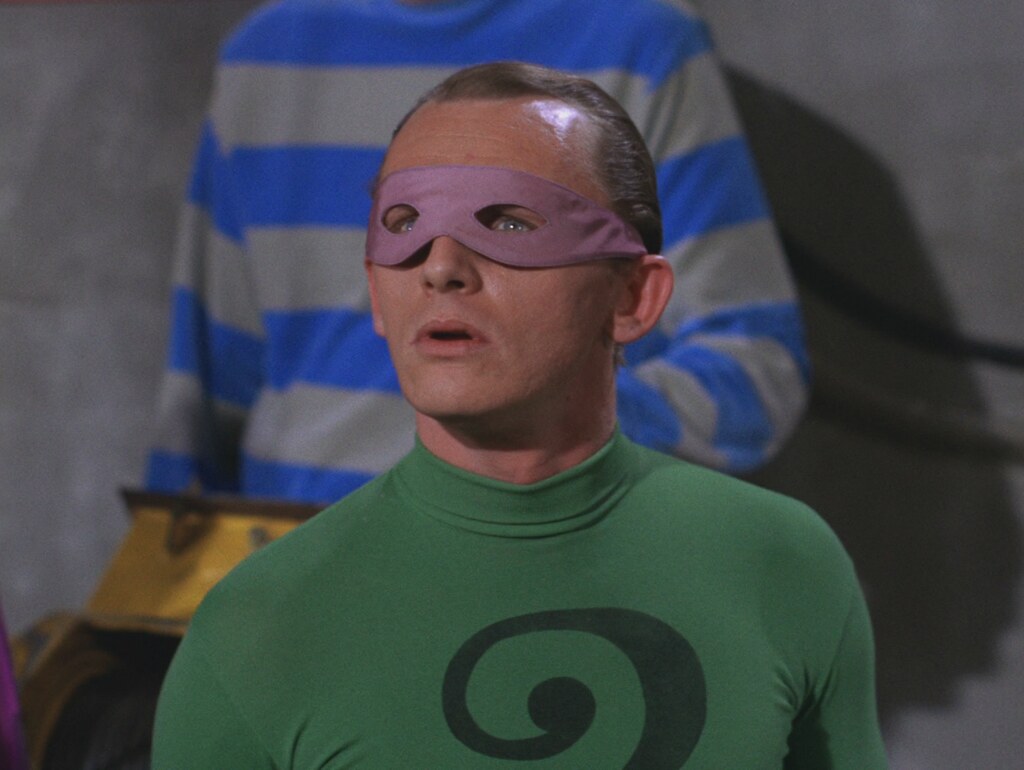


 Fred's Thoughts